
Understanding Contactors: A Comprehensive Guide to 4 Pole Contactor Applications
 Sharavani Singh
Share this Post to earn Money ( Upto ₹100 per 1000 Views )

In the vast realm of electrical engineering and power management, few components are as fundamental and widely used as contactors. These versatile devices are crucial in both residential and industrial settings, enabling safe and reliable control of electrical circuits. Among the many types of contactors available, the 4 pole contactor holds a special place due to its expanded functionality and suitability for a range of three-phase and neutral line applications.
Whether you're designing a control panel, managing motor circuits, or simply upgrading your existing power systems, understanding the role and capabilities of contactors is essential. This guide will walk you through the basics of contactors, delve into the unique features of the 4 pole contactor, and explore its many applications in modern electrical systems.
What Are Contactors?
Contactors are electrically controlled switches used to control the flow of electricity in a circuit. Designed primarily for high-power applications, they are activated by a control signal, typically from a lower voltage source, that energizes an internal coil to open or close the electrical contacts within the switch. This mechanism allows for remote control and automation of electrical circuits, especially where manual switching is unsafe or impractical.
Unlike circuit breakers, which are mainly used for overcurrent protection, contactors are meant for frequent switching and do not provide overload protection by themselves. They are a vital component in systems such as motor control centers, HVAC units, lighting systems, and various automated processes.
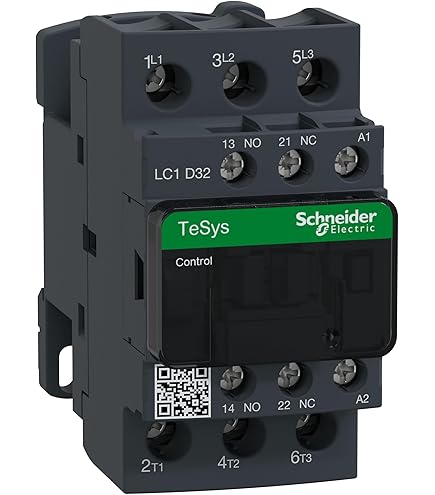
Anatomy of a Contactor
To fully grasp the function of a 4 pole contactor, it's important to understand the basic components of a contactor:
Electromagnetic coil: Energizes the contactor to open or close the contacts.
Main contacts: Carry the load current and are designed for high durability.
Auxiliary contacts: Provide feedback signals or additional control functions.
Enclosure or housing: Provides insulation and protects internal components from environmental factors.
Depending on the number of poles (switching paths), contactors are categorized into 2-pole, 3-pole, and 4-pole variants. The 4 pole contactor, in particular, includes an additional pole that allows for greater versatility, especially in neutral line switching or isolating applications.
What Makes the 4 Pole Contactor Unique?
The 4 pole contactor is essentially a standard contactor with four sets of contacts instead of the more typical three. Each pole can be independently used to control different phases in a three-phase system, along with an extra line, often a neutral. This added pole offers several advantages:
Neutral Switching: In many control systems, switching the neutral line along with the three-phase lines is crucial for safety and functionality. The 4th pole makes this possible.
Isolated Auxiliary Functions: The extra pole can be used for isolated auxiliary loads or feedback signals that need to be completely disconnected when the contactor is open.
Balanced Load Distribution: In applications with an uneven load or high safety requirements, the 4th pole helps in distributing and disconnecting all conductors evenly.
These features make the 4 pole contactor a preferred choice in more complex or sensitive applications, such as UPS systems, generator transfers, and lighting control systems.
Applications of 4 Pole Contactors
The 4 pole contactor has a wide array of uses in electrical and industrial environments. Here are some of the most common applications:
1. Motor Control Circuits
While 3-pole contactors are typically sufficient for most motor applications, the 4 pole contactor offers added safety by switching the neutral line, especially in systems where leakage or imbalance might occur.
2. Generator Transfer Systems
In standby generator systems, switching all lines, including the neutral, is crucial to avoid feedback or grounding issues. A 4 pole contactor ensures complete disconnection from one power source before switching to another.
3. Uninterruptible Power Supplies (UPS)
For sensitive equipment requiring a seamless transition between power sources, 4 pole contactors are ideal for isolating both live and neutral lines during transfer.
4. Lighting Control
In commercial buildings and stadiums where large lighting arrays are controlled centrally, 4 pole contactors provide complete disconnection capabilities for maintenance and energy savings.
5. Power Distribution Boards
Advanced distribution systems often rely on 4 pole contactors to ensure that both live and neutral lines can be isolated, particularly in high-load or critical safety environments.
Benefits of Using a 4 Pole Contactor
Opting for a 4 pole contactor offers several distinct benefits compared to standard configurations:
Increased Safety: By switching all lines, including neutral, you minimize the risk of electric shock or equipment damage due to floating neutrals.
Flexibility in Design: The extra pole allows for creative solutions in panel design, especially where feedback, signaling, or neutral switching is required.
Improved Isolation: Full isolation of both load and control circuits makes maintenance safer and more straightforward.
Versatility: Suitable for both resistive and inductive loads, the 4 pole contactor is compatible with lighting, motors, and electronic devices.
Key Considerations When Choosing a 4 Pole Contactor
Before selecting a 4 pole contactor for your application, consider the following:
Load Rating: Ensure the contactor is rated for the voltage and current of your system.
Coil Voltage: Match the control voltage of the coil with your system’s control circuit (e.g., 24V, 110V, 230V).
Application Type: Identify whether the application involves resistive or inductive loads, as this affects contactor sizing and selection.
Mechanical Durability: For systems with frequent switching, choose a contactor with high mechanical endurance.
Mounting and Space: Check if the contactor can be easily integrated into your control panel or distribution board.
Installation Tips for Contactors
Proper installation is vital for the efficient and safe operation of any contactor. When working with contactors, particularly 4 pole contactors, always follow these best practices:
Verify wiring diagrams before installation to avoid incorrect connections.
Use appropriate cable sizes and lugs for the load to ensure good electrical contact.
Install surge suppressors on the coil terminals, especially in inductive load applications, to extend contactor life.
Check the mechanical operation of the contactor by testing the movement of the contacts.
Label the terminals clearly to avoid confusion during maintenance or upgrades.
Future of Contactors in Smart Systems
As building automation and energy management become more advanced, contactors, including the 4 pole contactor, are evolving to support smart control features. Integration with programmable logic controllers (PLCs), IoT systems, and real-time monitoring tools makes these once-simple devices key players in intelligent power distribution.
Modern contactors can now be part of energy-efficient systems, offering not only control but also real-time feedback and diagnostics, allowing facility managers to make data-driven decisions and enhance operational uptime.
Conclusion
Whether you are a professional electrician, an engineer, or a facility manager, understanding the role and advantages of contactors, especially the 4 pole contactor, can greatly improve the safety, efficiency, and flexibility of your electrical systems. These components are not only vital for traditional switching tasks but are also integral to the future of automated and intelligent energy systems.
For those looking to integrate high-quality contactors into their electrical infrastructure, the Schneider Electric eShop is a reliable destination. Offering a wide selection of contactors, including advanced 4 pole contactor models, Schneider Electric provides durable, high-performance solutions backed by decades of innovation and industry trust.
Explore the Schneider Electric eShop today to find the ideal contactor for your next project and experience unmatched performance, reliability, and service.