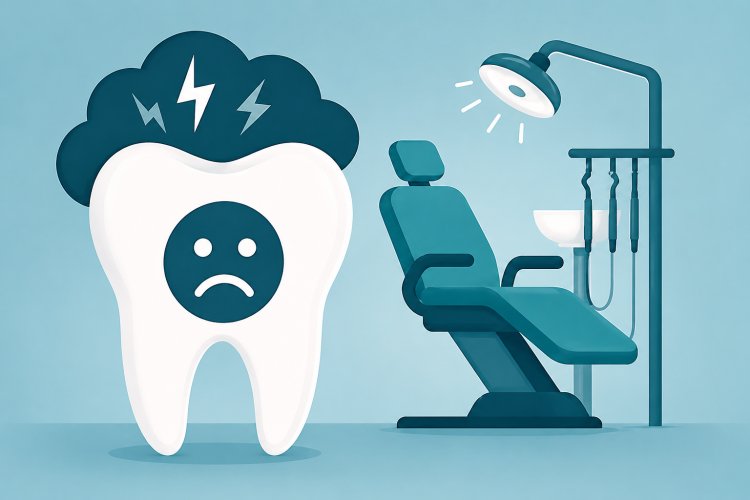
"How to Manage Dental Anxiety as an Adult"
Learn practical ways to manage dental anxiety as an adult, including preparation tips, relaxation techniques, open communication with your dentist, and options for a more comfortable dental experience.
 Mend Dental
Share this Post to earn Money ( Upto ₹100 per 1000 Views )

Dental anxiety affects a significant number of adults, and it's entirely manageable with the right strategies, from open communication with your dentist and gradual exposure through low-pressure visits, to sedation options for more severe cases. Avoiding the dentist due to anxiety often makes things worse over time, since small, easily treated issues can progress into larger, more involved ones, so finding a way to manage the anxiety is genuinely worthwhile for your long-term health. Below, we walk through practical strategies for managing dental anxiety, whatever its severity.
Why Do So Many Adults Experience Dental Anxiety?
Many adults experience dental anxiety for a range of reasons, including a previous negative or painful experience, fear of pain, a feeling of loss of control while in the chair, embarrassment about the condition of their teeth, or anxiety triggered by the sounds and smells of a dental environment. For some people, dental anxiety is part of a broader tendency toward anxiety generally, while for others it's specifically tied to the dental setting itself. Understanding the specific root of your own anxiety is often a useful first step, since different underlying causes can respond to different management approaches.
Does Avoiding the Dentist Make Dental Anxiety Worse?
Avoiding the dentist due to anxiety typically makes both the anxiety and your oral health worse over time, since small issues that could have been treated simply and painlessly are given the chance to progress into larger problems requiring more involved treatment. This creates a difficult cycle, where avoidance leads to worsening dental health, which in turn leads to more extensive treatment being needed, which then reinforces the original anxiety. Breaking this cycle, even with a single low-pressure visit, is often the most important step in preventing anxiety from causing lasting harm to your oral health.
How Does Communicating With Your Dentist Help?
Communicating openly with your dentist about your anxiety is one of the most effective and underused strategies, since a dentist who knows you're anxious can adjust their approach, explain each step before it happens, and check in with you throughout to help you feel more in control. Many practices are genuinely experienced in supporting anxious patients and adapt their pace and communication accordingly, so raising your anxiety upfront isn't something to feel embarrassed about. Our nervous patients approach is built specifically around this kind of communication and adjustment, making the experience more manageable for patients who find dental visits difficult.
Can Agreeing on a Stop Signal Help During Treatment?
Agreeing on a stop signal with your dentist before treatment begins can significantly reduce anxiety, since it restores a sense of control by giving you a clear, agreed way to pause the procedure at any point if you need a moment. This simple arrangement, often as straightforward as raising your hand, addresses one of the most common underlying fears in dental anxiety, the feeling of being unable to stop or communicate once treatment is underway. Knowing you have this option available frequently makes the entire experience feel more manageable, even if you never actually need to use the signal.
What Role Does Gradual Exposure Play in Managing Anxiety?
Gradual exposure plays a valuable role in managing dental anxiety by allowing you to build familiarity and trust through low-pressure visits before any significant treatment is needed. Starting with a simple checkup and clean, or even just an introductory conversation with the dentist, lets you become comfortable with the environment and the people without the added pressure of a procedure. This step-by-step approach tends to build genuine, lasting comfort far more effectively than forcing yourself through a major treatment while highly anxious, which can reinforce rather than reduce the underlying fear.
What Relaxation Techniques Can Help Before and During a Dental Visit?
Several relaxation techniques can help before and during a dental visit, including slow, controlled breathing, listening to music or a podcast through headphones during treatment, and practising mindfulness or visualisation techniques to redirect your focus away from the procedure. Some patients find it helpful to arrive early enough to settle rather than rushing in feeling stressed, while others benefit from scheduling appointments at a time of day when they tend to feel calmest. Experimenting with these approaches helps you find what works best for your specific anxiety, since different techniques suit different people.
What Sedation Options Are Available for Severe Dental Anxiety?
For more severe dental anxiety, sedation options can make treatment genuinely manageable, ranging from inhalation sedation, often known as laughing gas, which helps you feel relaxed while remaining conscious, through to deeper sedation options for patients whose anxiety is significant enough to prevent treatment otherwise. Inhalation sedation is a commonly used, mild option that wears off quickly after treatment, making it a practical choice for many anxious patients. Discussing the available options with your dentist helps determine which level of sedation, if any, is appropriate for your specific level of anxiety and the treatment involved.
How Can You Manage Anxiety Around Specific Procedures?
Managing anxiety around specific procedures often comes down to understanding what the procedure actually involves, since fear is frequently driven by uncertainty or outdated assumptions about how a treatment will feel. Many people are particularly anxious about procedures like a root canal or a tooth extraction, based largely on their historical reputation rather than the reality of modern treatment, which is generally far more comfortable than patients expect. Asking your dentist to explain exactly what a specific procedure involves, and how discomfort is managed, often significantly reduces the anticipatory anxiety that builds up beforehand.
Does Dental Anxiety Affect How You Should Approach Emergency Situations?
Dental anxiety can make emergency situations particularly stressful, but delaying care during a genuine dental emergency risks allowing a serious issue to worsen, which is exactly the scenario anxious patients most want to avoid. If you experience a dental emergency, contacting an emergency dentist promptly and mentioning your anxiety allows the practice to support you appropriately even under time pressure. Having an established relationship with a practice experienced in managing anxiety, built through regular low-pressure visits, also makes emergency care considerably less daunting if the need ever arises.
Can Addressing the Condition of Your Teeth Reduce Long-Term Anxiety?
Addressing the condition of your teeth, particularly if embarrassment about their appearance is part of your anxiety, can meaningfully reduce long-term anxiety by removing a significant source of the underlying stress. For patients whose anxiety is partly rooted in self-consciousness, treatments like cosmetic dentistry, teeth whitening, or restoring damaged teeth through general dentistry can improve both their oral health and their confidence, which often eases the emotional weight attached to dental visits over time. This approach works best alongside the communication and gradual-exposure strategies above, rather than as a standalone fix, but it addresses a genuine and common contributor to dental anxiety.
How Do You Find a Dentist Who's Good With Anxious Patients?
You can find a dentist who's good with anxious patients by looking for practices that specifically mention supporting nervous or anxious patients, reading about their approach, and being upfront about your anxiety when you first make contact. A practice genuinely experienced with anxious patients will respond to this with understanding and practical suggestions rather than dismissiveness, which is itself a good early sign of the right fit. Booking an initial low-pressure visit, even just to meet the dentist and discuss your concerns before any treatment, is a reasonable way to assess whether a particular practice feels like the right environment for you. For patients whose long-term avoidance has led to tooth loss, discussing restorative options like dental implants once you're comfortable can also be part of rebuilding both your smile and your confidence at a pace that suits you.
Frequently Asked Questions
Is dental anxiety common in adults?
Yes, dental anxiety is very common in adults, ranging from mild nervousness to more severe anxiety that can lead to avoiding the dentist entirely. It's a widely recognised issue, and many dental practices have specific approaches in place to support patients who experience it, so it's not something to feel alone in or embarrassed about.
Can I ask for breaks during a dental procedure?
Yes, you can absolutely ask for breaks during a dental procedure, and agreeing on a stop signal beforehand makes this easy to communicate once treatment is underway. Most dentists are happy to accommodate breaks, since a more relaxed patient generally makes for a smoother, more comfortable appointment for everyone.
Will sedation put me completely to sleep?
Not necessarily, since sedation options range from mild inhalation sedation, where you remain conscious and relaxed, to deeper options for more significant anxiety. The appropriate level depends on your specific anxiety and the treatment involved, which is something to discuss directly with your dentist beforehand.
How do I start seeing a dentist again after years of avoidance?
Starting again after years of avoidance is often easiest with a single, low-pressure introductory visit or a simple check-up, rather than jumping straight into major treatment. Being upfront about your history and anxiety allows the practice to ease you back in gradually, and taking that first step, however small, is usually the hardest but most important part.