Biohacking Market: Why Personal Health Optimization Is Moving Into the Mainstream?
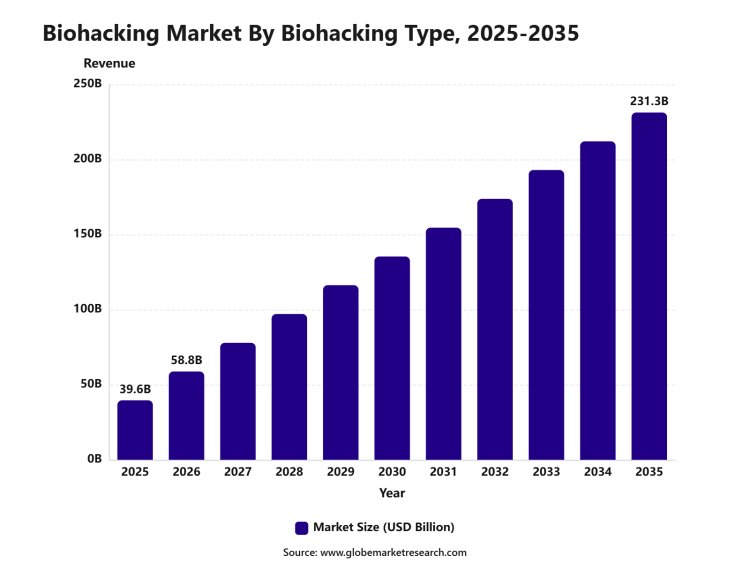
The Global Biohacking Market reached USD 39.6 bn in 2025 and is expected to grow to USD 231.3 bn by 2035, registering a CAGR of 19.3% from 2025 to 2035. North America held the largest regional share of 43.5% in 2025, supported by strong consumer interest in preventive health, growing use of wearable devices, rising investment in longevity science, and wider adoption of personalized wellness solutions. The U.S. Biohacking Market was valued at USD 13.2 bn in 2025 and is projected to expand at a CAGR of 17.3%, driven by the increasing use of health tracking technologies, nutrigenomics, smart supplements, sleep optimization tools, and direct-to-consumer wellness platforms.
 globemarketresearch
Share this Post to earn Money ( Upto ₹100 per 1000 Views )
Biohacking is no longer limited to a small group of advanced wellness users. It is now becoming part of everyday health management through wearable devices, sleep tracking, personalized nutrition, glucose monitoring, fitness apps, smart supplements, and preventive wellness platforms.
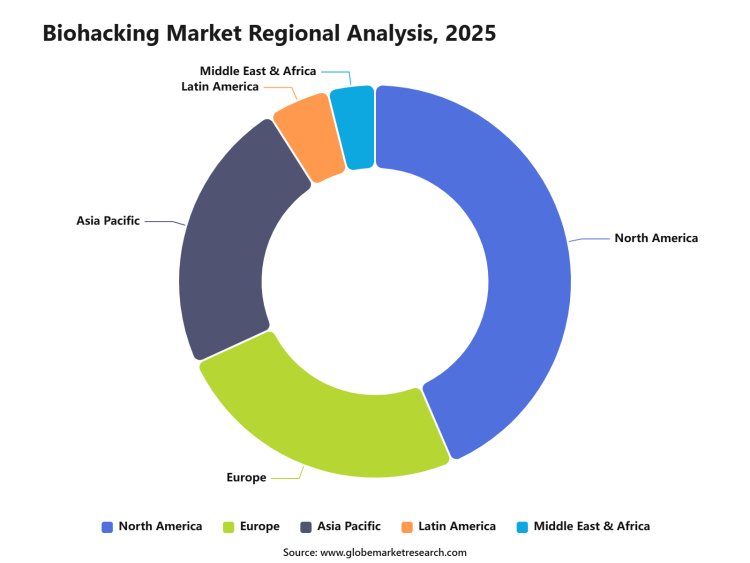
According to Globe Market Research, The Global Biohacking Market reached USD 39.6 billion in 2025 and is expected to grow to USD 231.3 billion by 2035, registering a CAGR of 19.3% from 2025 to 2035. North America held the largest regional share of 43.5% in 2025, supported by strong consumer interest in preventive health, wider use of wearable devices, rising investment in longevity science, and growing adoption of personalized wellness solutions.
Why Biohacking Is Gaining Momentum?
The growth of the market can be attributed to rising consumer focus on health optimization and preventive care. People are increasingly using personal health data to understand sleep quality, stress levels, activity patterns, nutrition response, blood glucose, recovery, and overall wellness.
Chronic disease risk is also making consumers more aware of daily health tracking. The CDC reported that 40.1 million people in the U.S. had diagnosed or undiagnosed diabetes in 2023, while 115.2 million U.S. adults had prediabetes. This is creating stronger interest in glucose tracking, weight management, personalized nutrition, activity monitoring, and early health intervention tools.
Key Market Insights
- Wearable devices led the product type segment with 38.9% share in 2025. Growth was supported by rising use of smartwatches, fitness bands, smart rings, biosensors, sleep trackers, and real-time health monitoring tools.
- Nutrigenomics accounted for 32.8% share by biohacking type. Demand was driven by rising interest in personalized nutrition, DNA-based diet planning, microbiome-linked health insights, and preventive wellness management.
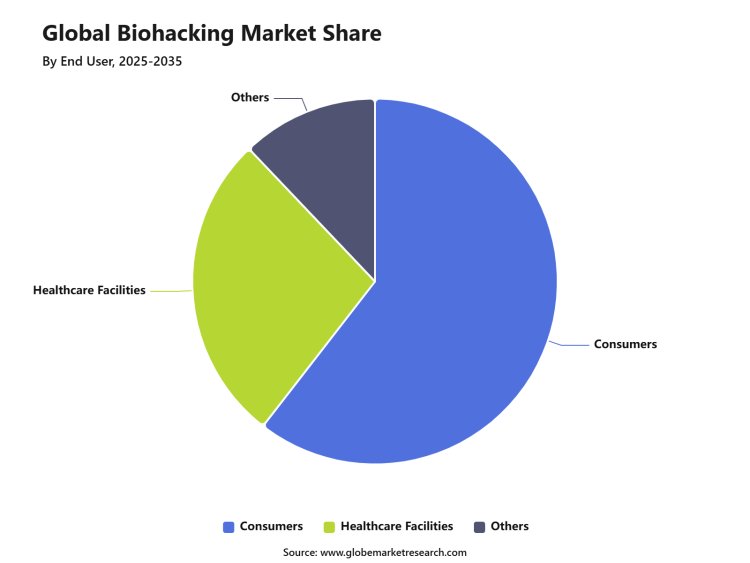
- Consumers held the largest end-user share at 60.5%. The segment was supported by growing demand for self-health tracking, wellness optimization, sleep improvement, fitness performance, and at-home health technologies.
- North America claimed 43.5% share of the global market. The region benefits from high wellness spending, strong adoption of health technologies, advanced digital health infrastructure, and greater consumer awareness of personalized health solutions.
Wearables Are Becoming the Entry Point
Wearable devices are one of the most practical entry points into biohacking. They allow users to track heart rate, sleep quality, blood oxygen, stress, movement, recovery, and fitness performance in real time. As these devices become more affordable and easier to use, they are helping biohacking shift from niche experimentation to daily wellness tracking.
A large U.S. survey published in JMIR found that wearable device ownership increased from 2020 to 2022. The study also found stronger ownership among younger users, urban users, people with higher income, and people with higher education levels. This shows that biohacking adoption is closely linked with digital comfort, health awareness, and access to personal wellness technology.
Personalized Nutrition Is Becoming More Important
Personalized nutrition is another major growth area. Consumers are moving away from general diet plans and showing higher interest in nutrition recommendations based on genetics, microbiome, metabolism, lifestyle, and health data.
The NIH Nutrition for Precision Health program is using artificial intelligence, microbiome research, genetics, proteins, metabolism, and other personal factors to develop algorithms that predict individual responses to foods and dietary patterns. This supports the long-term direction of nutrigenomics and personalized wellness platforms.
Physical Activity and Preventive Wellness Support Demand
Biohacking is also connected with broader preventive health needs. WHO reported that 31% of adults and 80% of adolescents do not meet recommended physical activity levels. Nearly 1.8 billion adults are physically inactive, and inactivity could rise to 35% by 2030 if current trends continue.
This creates a strong opportunity for wearable trackers, fitness apps, recovery tools, smart coaching platforms, and behavior-based wellness solutions. Consumers are looking for simple tools that can help them measure progress, build healthier routines, and reduce long-term health risks.
North America Leads the Market
North America led the Biohacking Market with 43.5% share in 2025. Growth in the region is supported by high adoption of wearable technology, strong consumer spending on wellness, advanced healthcare infrastructure, and wider acceptance of personalized health solutions. The U.S. Biohacking Market was valued at USD 13.2 billion in 2025, supported by rising use of health tracking devices, personalized nutrition, sleep optimization tools, and direct-to-consumer wellness platforms.
The region also has a strong ecosystem of digital health companies, wellness brands, supplement providers, wearable device makers, genetic testing companies, longevity clinics, and AI-based health platforms. This makes North America a key market for product innovation and early adoption.
Challenges Still Need Attention
The market also faces important challenges. High product cost, limited clinical validation for some biohacking products, data privacy concerns, misinformation, and regulatory uncertainty can affect consumer trust. Invasive biohacking practices and unverified wellness claims may also limit adoption among mainstream users.
For long-term growth, companies will need to focus on safety, transparency, scientific support, data protection, and simple user guidance. Products that provide clear benefits, responsible claims, and strong privacy protection are expected to gain higher trust.
Competitive Landscape
The Biohacking Market is becoming more competitive as wellness technology companies, wearable device manufacturers, supplement brands, digital health platforms, genetic testing companies, and longevity-focused service providers expand their offerings. Companies are focusing on smart devices, AI-based health insights, personalized nutrition, biomonitoring patches, at-home testing kits, and subscription-based wellness platforms.
Conclusion
Biohacking is moving from a niche wellness trend to a broader personal health movement. The market is being supported by wearable adoption, preventive health awareness, personalized nutrition, chronic disease concerns, and consumer interest in measurable wellness outcomes.
The strongest opportunity will be seen in solutions that combine ease of use, reliable data, privacy protection, and practical health guidance. As consumers become more focused on prevention, performance, and longevity, biohacking is expected to become an important part of the future wellness economy.
Sources:
https://vocal.media/futurism/global-biohacking-market-reached-usd-231-3-bn-by-2035
https://studylib.net/doc/28669053/biohacking-market-to-exceed-usd-231.3-billion-by-2035new-...
https://www.pinterest.com/pin/1122874119624687546
https://www.linkedin.com/feed/update/urn:li:activity:7477327700911624192/
https://globemresearch.blogspot.com/2026/07/is-biohacking-market-size-global.html
https://www.scribd.com/document/1050652259/Biohacking-Market-to-hit-USD-231-3-Billion-by-2035