Why an Open-ended Timing Belt is the Ultimate Solution for Custom Applications!
An Open-ended Timing Belt is the ideal solution for custom linear motion and positioning applications that require flexibility, precision, and reliable performance.
 conveyorbelts
Share this Post to earn Money ( Upto ₹100 per 1000 Views )
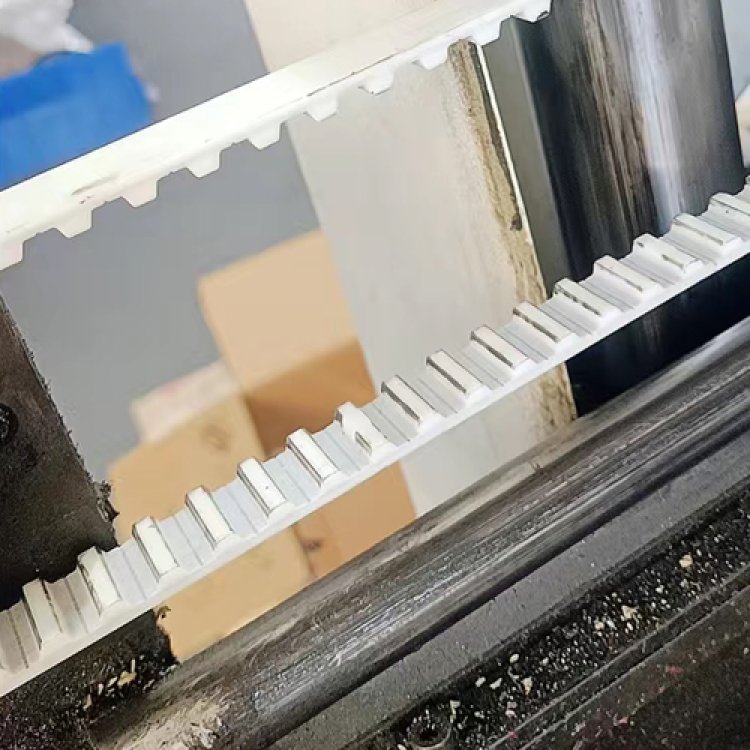
In today’s rapidly evolving manufacturing and automation landscape, versatility and adaptability are more crucial than ever. As industries shift toward flexible, client-specific solutions, machinery must be equally agile—ready to handle unique requirements and changing configurations. Enter the Open-ended Timing Belt, a power transmission innovation that revolutionizes how custom applications are engineered and executed.
While traditional endless timing belts certainly hold their place in fixed-length, repeating drive environments, they often fall short when the application demands freedom of length, modularity, or ongoing modification. By contrast, the open-ended timing belt represents the epitome of engineering flexibility, enabling designers and engineers to create fully customized drive solutions without being constrained by standard belt lengths or setups.
1. What is an Open-ended Timing Belt?
An Open-ended Timing Belt—also known as a linear or belt-on-reel timing belt—is a synchronous belt designed without joined ends. Unlike endless timing belts that form a seamless loop, open-ended belts are supplied in rolls or cut-to-length, offering total control over length and an adaptable approach to drive system design.
The belt consists of reinforced materials with precision-molded teeth on one side, allowing for exact engagement with matching pulleys or racks. These belts can be connected using clamps, fasteners, or other joining technologies to create the desired configuration on-site, or used linearly in applications such as linear actuators, conveyor systems, or adjustable machinery.
Because they are not restricted by set lengths, open-ended timing belts are the ultimate “custom-fit” power transmission component for bespoke machinery and rapid prototyping.
2. The Working Principle of Open-ended Timing Belts
At its core, the Open-ended Timing Belt works like any other timing belt—using molded teeth to mesh precisely with pulleys or timing bars, ensuring slip-free, synchronous transmission of motion and force. What distinguishes it is the absence of joined ends, meaning it does not have to be used as a loop.
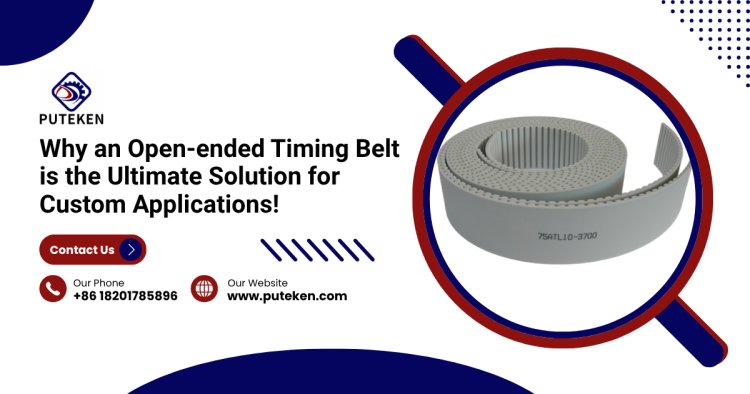
Here’s how open-ended timing belts typically function in custom systems:
- Linear Motion: Used with linear guides or rails, the belt is fixed at one or both ends, providing accurate linear force transmission over long or variable distances.
- Joined Loop: For custom looped systems, the open-ended belt is cut to the exact length needed and joined using mechanical connectors or specialized adhesives.
- Adjustability: The user can cut and install the belt on-site, making length adjustments or replacements fast and cost-effective.
With this adaptability, open-ended timing belts are perfect for modular equipment, adjustable machinery, or any application where flexibility is paramount.
3. Advantages of Using an Open-ended Timing Belt for Custom Applications
Switching to an Open-ended Timing Belt can offer your business a powerful array of new capabilities and benefits:
a) Unlimited Customization
The open-ended design allows for exact length matching, be it a 1-meter precision actuator or a 20-meter conveyor.
b) On-site Assembly and Rapid Prototyping
Installation is fast, and adjustments or reconfigurations can be made directly on the manufacturing floor, strengthening your ability to respond to evolving requirements.
c) Cost-Effectiveness
There’s no need to stockpile multiple belt sizes—purchase by the reel and cut exactly what’s needed, reducing inventory costs and waste.
d) Flexible Joining Techniques
Joining systems (mechanical clamps, tooth-to-tooth connectors, or special fasteners) allow repeated assembly/disassembly for maintenance, repairs, or system upgrades.
e) Long-distance Linear Motion
Open-ended timing belts are perfect for linear drives, where motion must be transmitted over extended runs, such as in gantry robots or material handling lines.
f) Adaptability to Future Modifications
Easily upgrade or modify machines with minimal downtime—simply replace or extend the belt on-demand without a full-system overhaul.
4. Essential Materials and Construction of Open-ended Timing Belts
A reliable Open-ended Timing Belt is engineered for strength, flexibility, and enduring accuracy. At Shanghai Puteken Transmission System Co., Ltd., our belts are designed with:
- Reinforcement Cords: Steel, aramid (Kevlar®), or fiberglass for superior tensile strength and minimal stretch.
- Base Material: High-grade polyurethane or rubber, ensuring excellent wear resistance, chemical stability, and operational safety.
- Precision-Molded Teeth: Most common tooth profiles include AT, T, HTD, or custom profiles, ensuring precise meshing with pulleys or racks.
- Surface Coatings (Optional): Nylon fabric or anti-static layers for specialized environments.
By leveraging premium materials, the belt maintains high accuracy even under heavy loads or continuous duty cycles.
5. Application Examples: Where Open-ended Timing Belts Shine
Open-ended timing belts are the backbone of today’s most innovative custom engineering projects:
- Linear Actuators: Automatically moving parts, pick-and-place units, or Z-axes in robotics.
- Adjustable Conveyor Systems: Extendable/retractable conveyors for parcel hubs, e-commerce, and airports.
- Automated Storage & Retrieval: High-rise warehouses with long-travel precision motion.
- Packaging, Printing & Textile Machines: Where product dimensions or machine configurations change regularly.
- CNC Machines: For axis movement, gantry travel, or changing fixture setups.
- Medical and Laboratory Automation: Small-scale, bespoke machines that require accuracy and fast retooling.
Real innovation happens where machines don’t fit “standard” molds—open-ended timing belts make these breakthroughs possible.
6. Customization Capabilities and Design Freedom
One of the greatest strengths of the Open-ended Timing Belt is its suitability for unique application engineering.
a) Tailored Lengths and Widths
From narrow, high-speed belts to extra-wide heavy-duty options, lengths can be tailored to a fraction of a millimeter.
b) Special Cording or Backings
Customized reinforcements handle high loads, heat, or chemical exposure, while backings (e.g., cleats, fixtures, anti-slip coatings) adapt to your conveyed product.
c) Tooth Profile Precision
Choose from a range of standard or custom tooth profiles for best fit and highest torque transmission.
d) Advanced Joining Methods
We offer various joining technologies, including mechanical clamps and specialized adhesives, for field assembly and maintenance.
At Shanghai Puteken Transmission System Co., Ltd., our engineering team collaborates with every client to create a seamless fit for each custom application—turning your imagination into a reality.
7. Installation and Maintenance Tips for Open-ended Timing Belts
While open-ended timing belts offer tremendous advantages, care and maintenance are key to maximizing service life and reliability.
Installation Best Practices
- Accurate Cutting: Use precision tools for clean cuts and square ends, avoiding frayed or damaged edges.
- Proper Joining: Follow manufacturer’s instructions for joining or clamping; improper attachment can cause tracking errors or slippage.
- Tensioning: Adjust to the manufacturer’s recommended tension—either too loose or too tight will impact performance.
- Alignment: Pulleys/tracks should be perfectly aligned to avoid edge wear or off-tracking.
Maintenance Guidelines
- Regular Inspection: Check belts for tooth wear, fraying, or joint loosening.
- Cleaning: Keep belts and pulleys free of dust, oils, or debris that can cause premature wear.
- Record-Keeping: Log installation dates and service intervals for proactive maintenance.
Shanghai Puteken Transmission System Co., Ltd. provides detailed technical manuals and on-demand support to help you get the most from your investment.
8. The Shanghai Puteken Transmission System Co., Ltd. Advantage
Why trust us for your next open-ended timing belt project? Here’s what you gain:
- Technical Expertise: We’re more than suppliers—we are your technical partners, offering deep experience across industries and applications.
- Comprehensive Product Range: From polyurethane to rubber belts, standard to custom profiles, we meet even the most demanding specifications.
- Rigorous Quality Control: Every belt is tested for dimensional accuracy, tensile strength, and durability.
- Rapid Prototyping and Fast Delivery: Get your project moving without long lead times.
- After-sales Support: Guidance, troubleshooting, and replacement parts—whenever you need them.
Unlocking True Flexibility in Automation
In a world defined by change, your machinery shouldn’t be left behind. Whether you’re reinventing a production line, building a custom robot, or simply seeking a more flexible and cost-effective approach to power transmission, the Open-ended Timing Belt is the ultimate solution.
By enabling total design flexibility, rapid on-site adjustability, and industrial-strength performance, open-ended timing belts are the secret ingredient behind today’s most innovative custom machines.
Frequently Asked Questions (FAQs)
Q1: What length options are available for open-ended timing belts?
A1: We provide open-ended timing belts in rolls or cut to requested lengths—whether short for actuators or long for extended conveyors. There is virtually no length restriction.
Q2: Can I join an open-ended timing belt into a loop myself?
A2: Absolutely! Using mechanical fasteners or special adhesives, you can quickly form a loop onsite, making installation and maintenance convenient.
Q3: Are there limits to the loads or speeds open-ended timing belts can handle?
A3: Open-ended timing belts are available with various reinforcement materials to suit different loads and speeds. Our engineers can help select the best fit for your application.
Q4: How do I maintain accurate tracking with an open-ended belt?
A4: Proper alignment of pulleys and tensioners, as well as precise and secure joining, help maintain tracking and reduce the risk of derailing.
Q5: Is there a risk of joint failure in high-load applications?
A5: Quality joining clamps or adhesives, when properly installed, withstand considerable tensions. For especially high-load applications, consult our engineers for reinforced solutions.
Q6: Can open-ended timing belts be used in cleanroom or food-safe environments?
A6: Yes. We offer belts with FDA-approved materials and anti-static or washable surfaces suitable for such settings.
Q7: What tooth profiles are available?
A7: We offer a broad range of profiles including T, AT, HTD, RPP, and more, along with custom options.
Q8: How quickly can I get a custom-length belt from Shanghai Puteken Transmission System Co., Ltd.?
A8: We pride ourselves on rapid turnaround—contact us with your specs and we’ll expedite production and delivery.
Q9: Can I retrofit an open-ended timing belt into existing equipment?
A9: In many cases yes, especially if the machinery can accept top-mounted joining clamps or is already modular in design.
Q10: What industries use open-ended timing belts the most?
A10: The most common sectors include factory automation, logistics, packaging, robotics, laboratory equipment, medical devices, and CNC/3D printing.