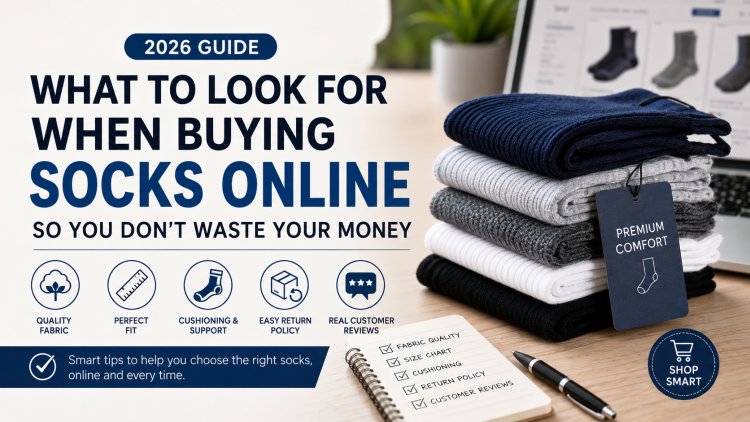
What to Look for When Buying Socks Online So You Don't Waste Your Money (2026)
Learn exactly what to check before buying socks online in 2026, from fabric and fit to sizing charts and return policies, so your money isn't wasted.
 chereeingram
Share this Post to earn Money ( Upto ₹100 per 1000 Views )
|
Quick Answer: Before buying socks online in 2026, check five things first: the fibre content (look for cotton, merino wool, or bamboo blends over cheap polyester filler), the sizing chart (never rely on "one size fits most"), the cushioning and arch support description, the seller's return and exchange policy, and verified customer reviews that mention durability after multiple washes. Skipping any one of these is the most common reason online sock orders end up in a drawer, unworn. |
Buying socks online sounds simple until the package arrives and the socks are thinner than expected, the wrong size, or worn through after three washes. Since socks are one of the most frequently repurchased clothing items, with the average North American shopper buying several new pairs a year, a bad batch is a small loss that adds up fast. This guide walks through exactly what a smart shopper checks before clicking "buy," using the same standards a footwear specialist would apply when sourcing socks for a retail collection.
Why So Many Online Sock Purchases Disappoint
Socks are a deceptively hard category to shop for online because you cannot touch the fabric, test the stretch, or feel the seams before purchase. Product photos can make a thin polyester blend look identical to a dense combed cotton pair. According to industry market research, the global socks market is projected to keep growing steadily through the rest of the decade, driven partly by the shift toward e-commerce and subscription-style sock buying. That growth also means more sellers, more private-label brands, and more inconsistent quality entering online marketplaces. The result is that shoppers need a sharper checklist than they would use in a physical store.
1. Check the Fabric Composition Before Anything Else
The single biggest factor in sock quality is what the sock is actually made of, and this information is often buried at the bottom of the product listing.
Cotton Blends
Cotton remains the most widely used sock fibre worldwide and is prized for softness and breathability, but 100 percent cotton socks alone tends to hold moisture against the skin. Look for cotton blended with a small percentage of nylon, spandex, or elastane (usually 3 to 10 percent) for shape retention and durability.
Merino Wool
Merino wool is increasingly popular for both winter warmth and, in lighter weights, summer breathability. It naturally resists odour and regulates temperature, which is why performance and outdoor brands rely on it heavily.
Bamboo and Recycled Fibres
Bamboo-derived viscose and recycled polyester blends have grown quickly in popularity as sustainability-conscious buyers look for softer, eco-friendlier options. If sustainability matters to you, check whether the listing specifies a certification rather than just the word "eco-friendly," since vague sustainability claims are common in this category.
What to Avoid
Be cautious of listings that only say "cotton blend" without a percentage breakdown, or that use stock photography instead of close-up fabric shots. This is often a sign of a lower-quality filler fabric.
2. Confirm the Sizing Chart, Not Just the Size Label
Sock sizing is not standardized across brands. A "medium" from one seller can fit a shoe size range completely different from another seller's medium. Before buying:
● Look for a sizing chart tied to shoe size ranges, not just S/M/L labels.
● Check whether the sock has reinforced heel and toe construction, which affects how it stretches over time.
● For crew or knee-high styles, confirm the calf circumference range if you have wider calves, since this is a common complaint in online reviews.
Reading Between the Lines of "One Size Fits Most"
This phrase is common on lower-cost listings and usually means the manufacturer is using a single mid-range size to cut production costs. It can work fine for average foot sizes but is a frequent source of returns for anyone above or below that middle range.
3. Look for Real Cushioning and Arch Detail, Not Just Marketing Language
Terms like "premium comfort" or "ultra soft" appear on nearly every listing and carry no real meaning on their own. Instead, look for specific, measurable details such as:
● Targeted cushioning zones (heel, ball of foot, or full cushion)
● Arch compression bands, which help reduce fabric bunching inside shoes
● Seamless toe closure, which reduces friction points
Podiatric sources note that poorly fitting or moisture-trapping socks can contribute to blisters, irritation, and foot fatigue, so cushioning and fit are not purely comfort features, they affect foot health over a full day of wear.
4. Verify the Seller's Return and Exchange Policy Before You Buy
Because socks cannot be tried on before purchase, the return policy is one of the most important things to check, and one of the most commonly ignored. Look specifically for:
● Whether unopened multi-packs can be returned if the sizing is wrong
● Whether the seller covers return shipping or deducts it from a refund
● A clear exchange window (30 days is a reasonable standard for apparel)
If a listing has no visible return policy or buries it in fine print, treat that as a warning sign rather than an oversight.
5. Read Reviews for Durability, Not Just First Impressions
A five-star review written the day the socks arrived tells you almost nothing about how they perform after ten washes. When scanning reviews, search for keywords like "after a few months," "still holding up," or "started thinning." Reviews that mention wash cycles, shrinkage, or heel wear are far more useful than reviews focused only on unboxing softness.
6. Match the Sock to Its Intended Use
A sock built for daily office wear is not built the same way as one meant for running, hiking, or standing shifts at work. Before adding to cart, confirm the listing specifies an intended use case. Occupational and athletic buyers in particular should look for moisture-wicking claims backed by fibre content, since sweat management is one of the leading factors in comfort and blister prevention during long wear periods.
7. Check for Certifications and Manufacturing Transparency
Listings that disclose where the socks are manufactured, what certifications (such as OEKO-TEX) apply, and what dye processes are used tend to correlate with higher overall quality control. This is also an E-E-A-T signal from a shopper's perspective: a brand willing to be transparent about sourcing is generally more trustworthy than one that is vague.
A Simple Pre-Purchase Checklist
Before checking out, run through this shortlist:
1. Fabric content listed with percentages
2. Sizing chart tied to shoe size, not just S/M/L
3. Specific cushioning and construction details
4. Visible, reasonable return policy
5. Reviews mentioning long-term durability
6. Clear intended use case (casual, athletic, work, dress)
7. Manufacturing or certification transparency
Shoppers browsing collections such as those at Pournara's online sock shop will notice that well-organized listings tend to check most of these boxes upfront, which is generally a good sign when comparing sellers side by side.
Frequently Asked Questions
What is the most important thing to check when buying socks online?
Fabric composition is the single most important factor, since it determines breathability, durability, and how the socks feel after repeated washing.
Are more expensive socks always better quality?
Not always. Price often reflects branding and marketing rather than material quality, which is why checking the fabric percentage and construction details matters more than price alone.
How do I know if a sock will fit before I buy it online?
Compare the seller's sizing chart to your actual shoe size rather than relying on generic S/M/L labels, and check reviews for comments about sizing running large or small.
Why do my socks wear out so quickly after buying online?
This is usually caused by low nylon or spandex content in the blend, which reduces shape retention and durability after repeated washing.
Is cotton or synthetic better for everyday socks?
Cotton blends are generally better for everyday comfort and breathability, while synthetic or merino wool blends perform better for athletic use or extended wear where moisture control matters more.
Should I buy socks in multi-packs or single pairs online?
Multi-packs are usually more cost-effective for basics like crew or ankle socks, but single pairs or smaller packs are safer when trying a new brand's sizing or fabric for the first time.
What return policy should I look for when buying socks online?
Look for at least a 30-day exchange window and a clear statement on whether unopened multi-packs qualify for returns, since sock returns are handled differently by different retailers.
Conclusion
Buying socks online does not have to be a guessing game. By checking fabric composition, sizing charts, cushioning details, return policies, and genuine long-term reviews before you check out, you can avoid the common mistakes that lead to wasted money and unworn drawers full of socks.
If you are ready to shop with confidence, browse the current sock collection at Pournara and apply this checklist to find a pair that actually lasts.