
The Liston Knife: A Legacy of Surgical Speed and Precision
 GreyMed
Share this Post to earn Money ( Upto ₹100 per 1000 Views )
The history of surgical instruments is filled with tools that represent significant leaps in medical practice. Among the most iconic is the Liston knife, an instrument synonymous with speed, precision, and a transformative era in surgical history. Its design, though simple, was revolutionary, allowing surgeons to perform amputations in minutes, a critical factor in the pre-anesthesia age. Today, while its original use has evolved, the principles behind its creation—efficiency and effectiveness—continue to inspire modern instrument design.
The Liston knife was Liston's answer to this challenge, enabling him to perform limb amputations in under three minutes, a feat that saved countless lives and solidified his legendary status.
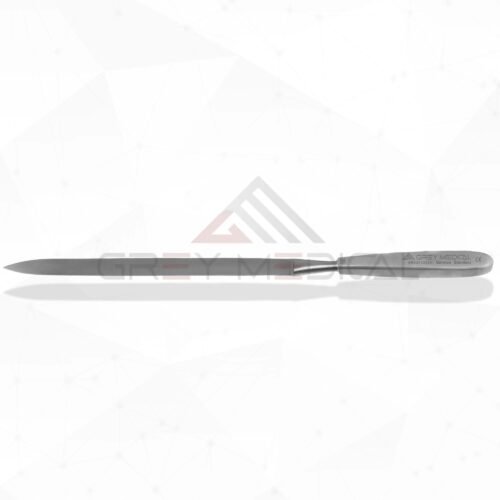
Design and Surgical Application
The defining feature of the Liston knife is its long, double-edged blade, typically made from high-quality steel. This design allowed the surgeon to make swift, clean cuts through skin, muscle, and tissue in a single, fluid motion. Unlike other surgical knives of the time, it did not require sawing or multiple passes, which minimized tissue damage and reduced the patient's suffering. The handle was simple and ergonomic, providing a firm grip for the powerful and rapid movements required during an amputation.
The technique for using the knife was as direct as its design. The surgeon would make a rapid circular incision around the limb, cutting through soft tissues down to the bone. Assistants would retract the skin and muscle, exposing the bone for the surgical saw. The speed of the Liston knife was its greatest asset, but it also demanded immense skill and anatomical knowledge from the surgeon. There was no room for error; a moment's hesitation could have disastrous consequences. This combination of a masterful tool and a masterful hand defined surgical excellence in the 19th century.
The Evolution from Amputation to Modern Uses
With the introduction of anesthesia in the mid-19th century, the frantic need for surgical speed began to diminish. Surgeons could now take a more deliberate and meticulous approach to their work. As surgical techniques became more refined, the primary role of the surgeons knife in major amputations waned. Procedures became more focused on preserving tissue and promoting better healing, which required different types of instruments.
However, the legacy of this powerful tool did not end there. While no longer the go-to instrument for limb removals, variations of the knife found new life in other surgical specialties. Its sharp, precise blade made it suitable for other procedures requiring long, clean incisions. The principles of its design—a sharp, reliable cutting edge crafted for efficiency—have been adapted and integrated into various modern surgical blades. The focus on quality materials and ergonomic design remains a cornerstone of instrument manufacturing.
GreyMedical®: Upholding a Tradition of Excellence
The spirit of innovation that drove Robert Liston to create his famous knife is alive and well in today's medical technology companies. GreyMedical®, a privately owned medical technology company, is dedicated to this same tradition of innovation and excellence in the craft of surgical instruments. By studying the historical significance and functional brilliance of tools like the Liston knife, companies like GreyMedical® continue to push the boundaries of surgical technology.
Modern instrument design benefits from advanced materials, precision engineering, and a deep understanding of contemporary surgical needs. GreyMedical® embodies this progress, creating instruments that offer surgeons superior control, durability, and performance. The commitment to quality ensures that today's medical professionals have the best possible tools to achieve optimal patient outcomes, carrying forward the legacy of pioneers who shaped the future of surgery.
Conclusion
The Liston knife stands as a powerful symbol of a pivotal moment in medical history. It represents the perfect union of form and function, designed to meet a critical need in a challenging era. While its direct application has changed, its influence endures in the ongoing pursuit of surgical perfection. The principles of speed, precision, and unwavering quality it championed are the same principles that guide leading manufacturers like GreyMedical® today, ensuring the legacy of surgical excellence continues for generations to come.









![Wilder Leaf Organic Hemp Gummies New Zealand [URGENT REPORT 2026] Know The Facts Before Buying!](https://blog.rackons.in/uploads/images/202606/image_380x226_6a3b652070c8c.jpg)








