
Company Dissolution vs Company Liquidation: What's the Difference?
company dissolution, company closing, closing company in UK
 Sid
Sid
Share this Post to earn Money ( Upto ₹100 per 1000 Views )
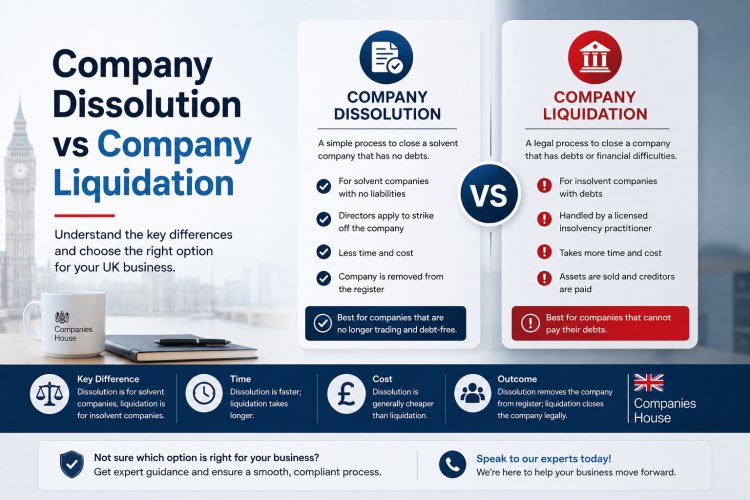
Business owners often use the terms company dissolution and company liquidation interchangeably, but they describe two very different legal processes. Understanding the distinction is important because choosing the correct procedure depends largely on the financial position of your company.
Get your company dissolved now!
Company dissolution, also known as voluntary strike off, is generally intended for companies that are solvent and have stopped trading. It allows directors to remove the company from the Companies House register once all legal requirements have been satisfied. After dissolution, the company no longer exists as a legal entity.
Liquidation, by contrast, is a formal insolvency process that usually applies when a company cannot pay its debts or where its assets need to be realised and distributed. Liquidation is carried out under insolvency legislation and is typically managed by a licensed insolvency practitioner.
One of the biggest differences between the two processes is the company's financial position. A solvent company that has settled its obligations and no longer wishes to trade may qualify for voluntary dissolution. However, if the company owes money it cannot repay, has creditor disputes, or faces financial insolvency, liquidation may be required instead.
The administrative process also differs. Company dissolution usually involves submitting a strike-off application to Companies House, notifying interested parties, and waiting for the statutory notice period to expire. Liquidation involves appointing an insolvency practitioner who manages company assets, creditors, and legal obligations throughout the winding-up process.
Costs can vary significantly between the two options. Dissolution is generally the simpler and more cost-effective procedure for eligible companies because it involves fewer legal and administrative steps. Liquidation is usually more complex due to the involvement of insolvency professionals and the additional legal responsibilities associated with insolvent businesses.
Another key distinction relates to creditors. During a voluntary dissolution, creditors have the opportunity to object if they believe money remains outstanding. Companies House may suspend or reject the strike-off application until these matters have been resolved. In a liquidation, creditors play a central role in the formal insolvency process and may receive distributions from company assets where funds are available.
Directors should carefully assess their company's financial position before deciding which route to follow. Choosing dissolution when liquidation is required could result in delays, objections, or legal complications. Seeking professional advice can help determine the most appropriate option based on the company's circumstances.
For many dormant or inactive businesses with no outstanding liabilities, company dissolution offers a straightforward way to close the company and bring statutory filing obligations to an end. Businesses experiencing financial difficulties, however, should obtain specialist insolvency advice before taking action.
Understanding the difference between dissolution and liquidation enables directors to make informed decisions while ensuring the company is closed in accordance with UK law. Selecting the correct procedure protects both the business and its stakeholders while helping directors meet their legal responsibilities.
















![SodaSlim Reviews [PROS or CONS] Do NOT Buy Until Knowing This!](https://blog.rackons.in/uploads/images/202608/image_380x226_6a7c039c72544.jpg)

