A Guide to the Types of Surgical Instruments
 GreyMed
Share this Post to earn Money ( Upto ₹100 per 1000 Views )
Surgical success depends on the skill of the surgeon and the quality of their tools. The operating room contains an array of specialized instruments, each designed for a specific function. Understanding the various types surgical instruments is fundamental for any medical professional, from a student to a seasoned surgeon. This guide will explore the main categories of these essential tools, shedding light on their design and application in modern medicine.
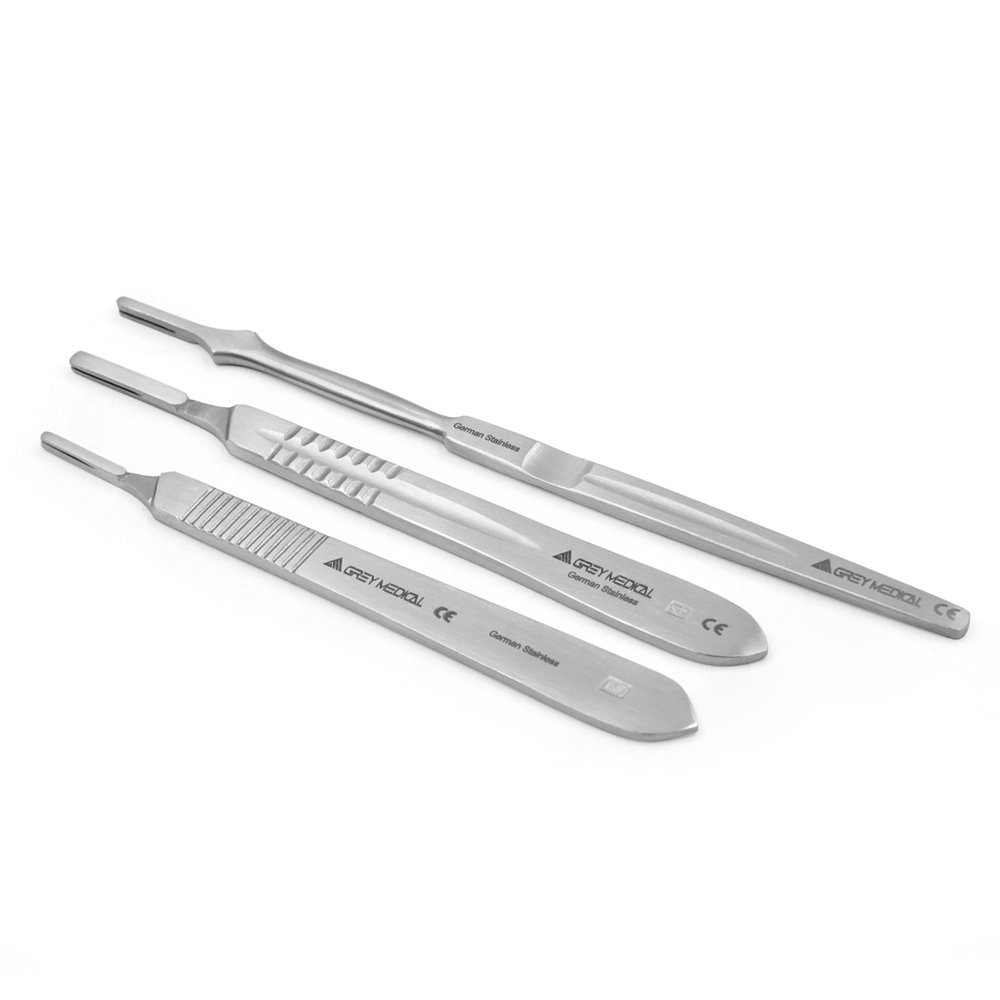
The Foundation: Cutting and Dissecting Instruments
The initial phase of most surgical procedures involves making an incision. For this, surgeons rely on a variety of cutting and dissecting instruments. These tools are designed to separate, incise, and remove tissue with precision. The most recognizable instrument in this category is the scalpel, which consists of a reusable handle and a disposable blade. Blades come in numerous shapes and sizes, each suited for different types of cuts.
Beyond scalpels, this group includes surgical scissors. Instruments like Mayo scissors are used for cutting heavy tissues such as fascia, while Metzenbaum scissors are finer and designed for dissecting delicate tissues. Other instruments in this category include bone cutters and saws, which are essential for orthopedic procedures. The sharpness and durability of these tools are critical for clean incisions that promote better healing.
Grasping and Holding: The Surgeon's Extended Hand
Once an incision is made, surgeons need to hold or manipulate tissue to gain better visibility and access to the surgical site. Grasping and holding instruments serve this purpose. Forceps are the most common tools in this category, acting as extensions of the surgeon's hands. They allow for the gentle yet firm handling of tissues, organs, and even sutures.
There are two primary kinds of forceps: thumb forceps (often called pickups) and ring forceps (or hemostats). Thumb forceps, like Adson forceps, are used for delicate tissue manipulation. Ring forceps, such as Kelly or Crile forceps, have a locking mechanism that allows them to clamp onto tissue or blood vessels securely. The wide variety of forceps highlights the diverse needs within different types surgical instruments.
Clamping and Occluding: Controlling Bleeding
Controlling bleeding is one of the most critical aspects of any surgery. Clamping and occluding instruments are designed specifically for this task. These tools, commonly known as hemostats, are used to compress blood vessels and stop blood flow. Their locking ratchets allow them to remain clamped in place without continuous pressure from the surgeon.
Hemostats come in various sizes and shapes, with straight or curved jaws. For example, the Mosquito hemostat is a small, fine-tipped instrument used for clamping small blood vessels, while larger Kelly or Rochester-Pean forceps are used for larger vessels. The ability to effectively occlude vessels is vital for maintaining a clear surgical field and preventing significant blood loss, making these instruments indispensable. A deep understanding of these specific types surgical instruments is crucial for surgical teams.
Retracting and Exposing: Creating a Clear View
During a procedure, it is essential to have a clear and unobstructed view of the surgical area. Retracting and exposing instruments are used to hold back tissues, organs, and the edges of an incision. This allows the surgical team to see and work within the body cavity effectively. Retractors can be either hand-held or self-retaining.
Hand-held retractors, like the Army-Navy retractor, require a surgical assistant to hold them in place. Self-retaining retractors, such as the Weitlaner or Balfour retractors, have a locking mechanism that keeps them open, freeing up the assistant's hands for other tasks. The choice of retractor depends on the depth and location of the surgical site. Proper retraction is key to a safe and efficient operation. This category represents a significant portion of the essential types surgical instruments.
Suturing and Stapling: Closing the Procedure
After the primary surgical work is complete, the incision must be closed. Suturing and stapling instruments are used for this final, crucial step. Needle holders, or needle drivers, are the primary tools for suturing. They are designed to securely grip a surgical needle, allowing the surgeon to pass it through tissue with precision and control.
In addition to traditional suturing, surgical staplers are often used for closing skin incisions or for connecting or removing parts of internal organs. Staplers can be faster than suturing and may create a more uniform closure. The choice between sutures and staples depends on the type of tissue, the location of the incision, and the surgeon's preference. This final step relies on having the correct tools from the broader collection of surgical instruments.
The Role of Innovation in Surgical Tools
The field of medical technology is constantly evolving, and surgical instruments are no exception. Companies like GreyMedical®, a privately owned medical technology company, are dedicated to innovation and excellence in the craft of surgical instruments. Through advanced materials, ergonomic designs, and improved functionality, these innovations help enhance surgical precision, improve patient outcomes, and increase efficiency in the operating room. From developing less invasive tools to creating more durable and reliable instruments, the commitment to quality craftsmanship is paramount. The continuous improvement of all types surgical instruments drives the medical field forward.
Conclusion
The world of surgical instruments is vast and intricate, with each tool meticulously designed to perform a specific function. From cutting and dissecting to clamping, retracting, and suturing, these instruments are the essential components of a surgeon's toolkit. A comprehensive understanding of their functions and applications is fundamental to the safety and success of any surgical procedure. As technology and innovation continue to advance, the instruments themselves will evolve, further refining the art and science of surgery for generations to come.