18k Gold Plated Jewelry: The Daily Wear & Tarnish Guide
Stop wasting money on fading gold. Master the 18k plating threshold, skin chemistry hacks, and styling secrets for jewelry that actually lasts daily.
 sarazia
Share this Post to earn Money ( Upto ₹100 per 1000 Views )
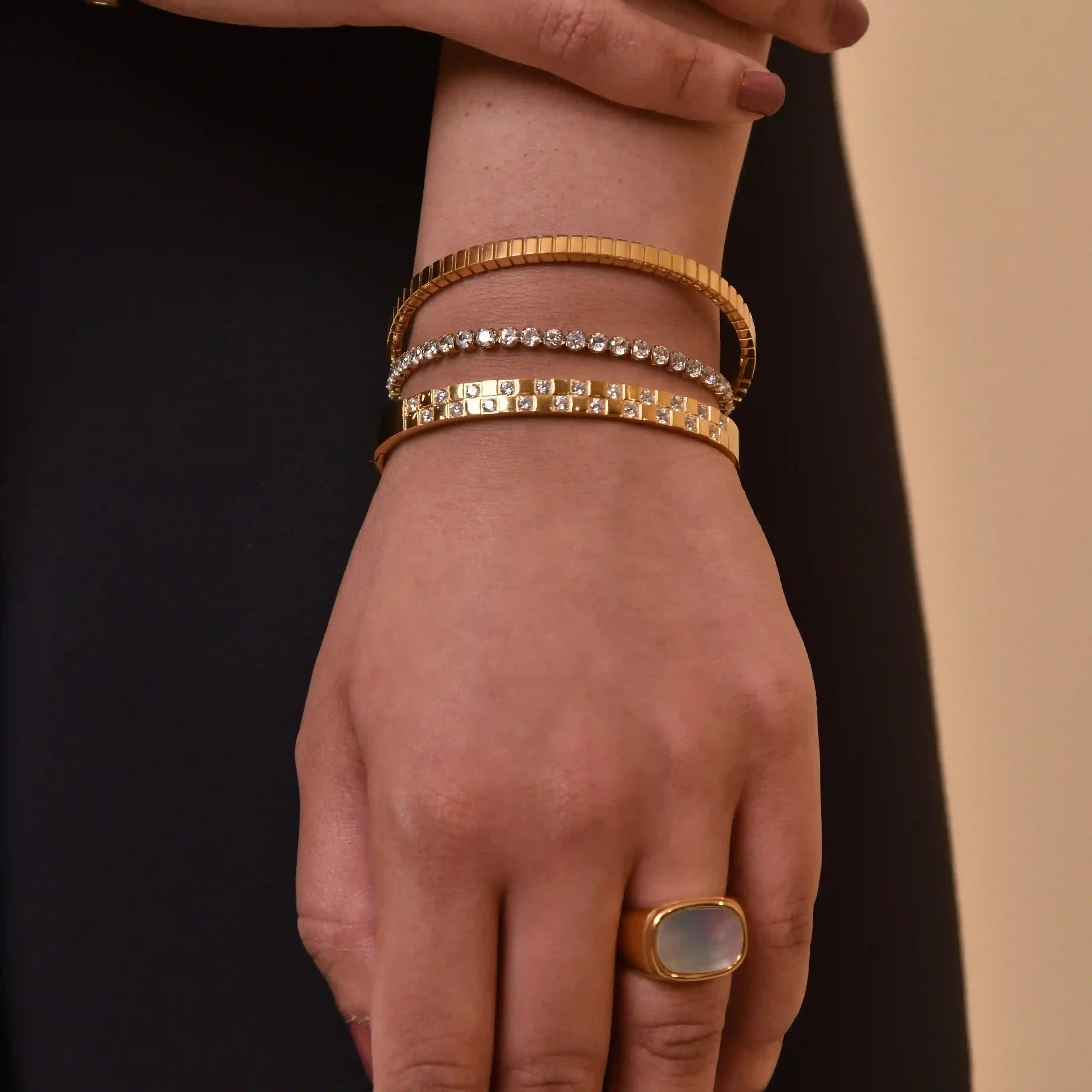
The 18k Plating Threshold: Solving the Daily Wear Paradox
The internal conflict of the modern jewelry consumer oscillates between the desire for the deep, buttery luster of high-karat gold and the practical anxiety of "tarnish-phobia." Most enthusiasts find themselves in a cycle of purchasing "affordable" gold-plated pieces that fail within weeks, leading to a cluttered drawer of dull, greyish brass. Achieving a permanent, high-end aesthetic requires moving past the marketing jargon and understanding the molecular reality of how 18k gold plating interacts with human skin, textiles, and daily friction.
Beyond the Surface: Why 18k Micron Thickness is the Silent Arbiter of Your Professional Styling Confidence
The primary insecurity regarding plated jewelry isn't just about the metal turning green; it’s about the subtle loss of "prestige" when a piece begins to thin at the contact points. When a necklace loses its 18k saturation, it shifts from a warm, authoritative yellow to a cold, industrial pale—a transition that can inadvertently make a curated fashion ensemble look uncoordinated. To maintain styling authority, one must look for a minimum of 2.5 microns (often labeled as Vermeil if over sterling silver), as this thickness provides the structural integrity needed to withstand the "micro-abrasions" caused by silk collars or the weight of a winter coat. Understanding these technical nuances allows you to transition from being a passive consumer to an informed curator of your own daily wear.
The Base Metal Migration: Why Your Skin Chemistry Dictates Your Base Metal Choice
Most users are unaware that "tarnishing" is often not the gold wearing off, but the base metal (like copper or brass) migrating through the gold layer to the surface. If you have a high skin pH or sweat frequently, the "What If" of green skin is a legitimate technical hurdle that cannot be solved by cleaning alone. For those with high-acidity skin, 18k plating over 925 Sterling Silver is the non-negotiable standard, as it provides a more stable foundation that resists the rapid oxidation seen in cheaper alloys. For a deeper dive into how different materials impact longevity and skin safety, referencing comprehensive jewelry guides can provide the necessary technical benchmarks for your next acquisition.
The "Against the Grain" Styling Framework: Pairing Saturation with Textile Texture
Editorial-level styling requires using jewelry as a "tactile contrast" rather than just an accessory. 18k gold plating has a specific light-refraction index that is deeper and more "honey-toned" than 14k or 10k alternatives.
- Against Raw Linen: The deep 18k yellow anchors the porous, matte texture of natural fibers, preventing the outfit from looking washed out.
- Despite High-Density Knits: In winter, the obsession is often how to prevent chains from snagging; choose "snake" or "herringbone" weaves that offer a smooth surface area, minimizing friction against wool fibers.
- The Office Lighting Variable: 18k plating is designed to look best under 3000K (warm) lighting, making it the ideal choice for evening events and upscale indoor environments where lower-karat gold can appear "tinny."
The Decision-Ready Protocol: When to Invest and When to Retire
Confidence in your jewelry collection comes from knowing the expiration date of your pieces. A "Decision-Ready" consumer understands that gold plating is a high-performance coating, not a permanent state of matter. If a piece is worn 3–5 times a week, a 2.5-micron 18k layer will typically maintain its editorial luster for 18 to 24 months before the base metal begins to influence the tone. Use the "Claw-and-Clasp" test: if the mechanical parts of your jewelry—the hinges and clasps—show silver-toned friction marks, it is time to either re-plate or transition that piece to "occasional wear" to preserve the remaining aesthetic integrity of the visible surfaces.
Conclusion: From Consumer Anxiety to Curatorial Authority
Building a jewelry hub isn't about promoting a single product; it is about eliminating the "obvious layer" of fashion and replacing it with the hard science of wearability. By focusing on micron thickness, base-metal stability, and the specific light-refraction of 18k tones, you remove the guesswork from your morning routine. You are no longer buying "gold-colored" items; you are investing in a calculated aesthetic that survives the friction of daily life while maintaining the psychological edge that only high-karat saturation can provide.