
We Spent 3 Months Setting Up Trade Show Booths the Wrong Way Here's What Finally Worked
After wasting thousands of dollars on the wrong trade show displays, we found a smarter approach. Here's the honest breakdown of what failed, what worked, and how custom fabric backdrops changed everything for our booth setup.
 juggernaut
Share this Post to earn Money ( Upto ₹100 per 1000 Views )
I'll be honest with you.
The first three trade shows we attended, we looked like we printed our booth display at a FedEx store the morning of the event. Because we kind of did.
We're a small product company. Not a massive brand with a $50,000 event budget. We had a folding table, a vinyl banner held up with zip ties, and an optimism that I now find both admirable and embarrassing.
Nobody stopped at our booth.
Not because our product was bad. Because we looked like we didn't take ourselves seriously so why would anyone else?
That experience sent me down a long, expensive rabbit hole of figuring out what actually makes a trade show booth work. This post is the honest version of that journey what we got wrong, what eventually clicked, and the one decision that genuinely changed our results.
The First Mistake: Thinking "Any Display" Would Do
When you're early stage, there's a temptation to spend as little as possible on everything that isn't your core product. I get it. I lived it.
So we bought the cheapest pop-up banner stand we could find online. It arrived creased, the base wobbled, and the graphic quality looked fine on a laptop screen but terrible in person under fluorescent lighting.
Here's what I didn't understand at the time: at a trade show, your booth IS your first impression. The attendees haven't used your product yet. They haven't read your website. They're walking down an aisle making split-second decisions about which booths deserve 30 seconds of their attention.
A bad display doesn't just look unprofessional it actively signals "this company is not serious."
The Second Mistake: Prioritizing Cheap Over Portable
After the banner stand disaster, we upgraded. We invested in a heavier, more professional looking display system.
It looked great. It also weighed 47 pounds, required two people to assemble, took 90 minutes to set up, and cost us $340 in airline baggage fees every time we traveled to an event.
We used it twice before it lived permanently in a storage unit.
The lesson: for small teams attending multiple events, portability isn't a luxury it's a requirement. A display you can't realistically carry and set up alone is a display you won't use.
What Actually Changed Everything: Tension Fabric Displays
A founder friend who does a lot of events mentioned fabric backdrop displays almost as an aside in a conversation. I'd seen them before but assumed they were for much bigger budgets.
Turns out, I was completely wrong.
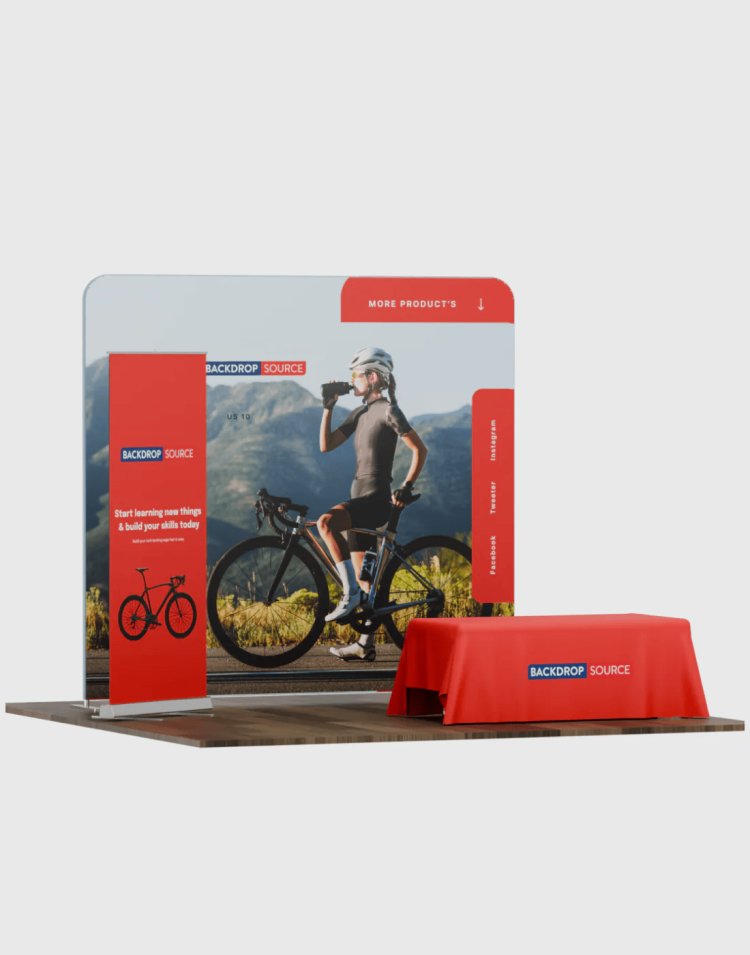
Tension fabric displays the kind that use a lightweight aluminum frame with a printed fabric graphic stretched over it have come down dramatically in price while the print quality has gone up. The fabric printing technology now produces genuinely sharp, vibrant graphics that hold up under the kind of harsh event lighting that destroys cheaper vinyl prints.
What changed for us specifically:
The setup time dropped to under 15 minutes. The aluminum frame snaps together without tools. The fabric graphic slips over it like a pillowcase. One person can do it alone.
The carry weight dropped to under 8 pounds. The whole thing packs into a single carry-on sized bag. No more baggage fees. No more logistics nightmares.
The visual impact went up dramatically. Fabric doesn't crease or reflect light the way vinyl does. The colors stay true. The edges stay taut. It looks intentional and professional without screaming "we rented this."
The Specific Thing We Got Right: Custom Sizing
One thing worth mentioning and this took us an embarrassingly long time to figure out is that you don't have to use standard display sizes.
At our first few events, we were cramming our branding into whatever dimensions the cheap displays came in. It always looked a bit off. The proportions were wrong for our logo. Text got awkward.
When we eventually ordered through BackdropSource, the option to do custom sizes was a genuine unlock. We could spec the display to our actual booth space and our actual branding rather than the other way around. That sounds obvious in retrospect. It wasn't obvious to us at the time.
What We'd Tell Ourselves 3 Years Ago
If I could go back and talk to the version of us setting up that first booth with zip ties and blind optimism, I'd say three things:
1. Your display is not a cost it's a conversion tool. Think about it like a landing page. A bad landing page doesn't just fail to convert it actively erodes trust. Same with a bad booth display. The ROI on a proper display pays for itself after one event if it brings you even a handful of serious conversations.
2. Prioritize the setup experience, not just the look. You will be setting this thing up tired, probably after traveling, possibly alone, possibly running late. A display that looks great in a product photo but takes two hours to assemble will become a source of dread. Fabric tension displays specifically solve this.
3. Get the sizes right before you order. Measure your booth space. Check the venue specs. Order to your actual dimensions. This is twenty minutes of work that saves you from owning a display that technically fits but never looks quite right.
One More Thing: Print Quality Actually Matters More Than You Think
We ordered from three different suppliers before we got this right.
The difference between a mediocre fabric print and a good one isn't obvious in product mockups. It becomes obvious in person, under event lighting, when an attendee is standing three feet away looking at your booth.
Good fabric printing uses dye-sublimation technology, which bonds the ink directly into the fabric fibers rather than sitting on top. The result is richer colors, sharper edges, and a print that doesn't fade or crack after a few uses. It's worth specifically asking suppliers whether they use dye-sublimation not all of them do, and the ones that don't will often not volunteer that information.
The Honest Summary
We lost time and money learning all of this the slow way. The short version:
- Cheap banner stands look cheap in person regardless of how they look on screen
- Heavy professional displays are useless if your team can't practically use them
- Tension fabric displays on lightweight aluminum frames solve both problems
- Custom sizing matters more than most people realize
- Print quality (dye-sublimation specifically) is worth asking about explicitly
If you're a small team doing events and you're still in the zip-tie-and-optimism phase, I hope this saves you a few expensive lessons.
We currently use tension fabric backdrop displays from BackdropSource for our events. They offer custom sizing, dye-sublimation printing, and the whole setup fits in a carry bag which is the thing that actually sold us.
















