Tax Responsibilities Before Closing a Company!
Closing a UK limited company involves more than simply submitting an application for dissolution. Before a company can be closed, directors should ensure that all outstanding tax and financial obligations have been properly addressed.
 Sid
Sid
Share this Post to earn Money ( Upto ₹100 per 1000 Views )
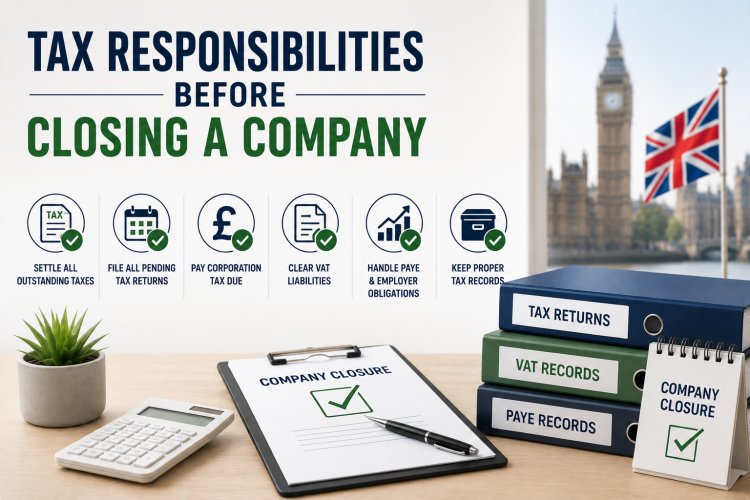
Closing a UK limited company involves more than simply submitting an application for dissolution. Before a company can be closed, directors should ensure that all outstanding tax and financial obligations have been properly addressed.
Get Your Company Closure in UK Today!
Taking the time to review your company's tax position before applying for dissolution can help prevent unnecessary delays, reduce the risk of future complications, and ensure the closure process is completed in accordance with legal requirements.
Why Tax Matters Before Company Closure
When a company stops trading, its legal responsibilities do not end immediately. Directors remain responsible for ensuring that the company's affairs are brought to an orderly conclusion, including meeting any outstanding tax obligations.
Addressing these matters before applying for dissolution helps ensure that the company is closed with accurate financial records and minimises the likelihood of issues arising after the business has been removed from the Companies House register.
Review Your Company's Tax Position
Before beginning the dissolution process, directors should carefully review the company's tax affairs to ensure everything has been completed correctly.
Areas that commonly require attention include:
Corporation Tax
If your company has been trading, you should ensure that any Corporation Tax obligations have been addressed before closure.
Review your company's tax position carefully and confirm that all required submissions and payments relating to Corporation Tax have been dealt with appropriately.
VAT (Where Applicable)
If your company is registered for VAT, you should consider the steps required to bring your VAT affairs up to date before closing the business.
Ensuring your VAT responsibilities have been completed can help avoid administrative issues during the dissolution process.
PAYE Responsibilities
Companies that employ staff should review any outstanding PAYE obligations before applying for dissolution.
This includes ensuring that payroll responsibilities have been properly concluded and that any relevant reporting requirements have been addressed.
Final Accounts
Preparing final accounts is an important step in winding up a company's affairs.
Accurate financial records provide a clear picture of the company's final position and help support an orderly closure process.
Keep HMRC Informed
Maintaining communication with HMRC throughout the company closure process is an important part of responsible company management.
Keeping the relevant authorities informed helps ensure that your company's tax affairs can be finalised appropriately before the business is dissolved.
Where necessary, directors should respond promptly to any requests for information and ensure all outstanding matters have been resolved before the closure is completed.
Retain Company Records
Although a company may eventually be dissolved, directors are often required to retain certain company records for the period specified by law.
Keeping accurate records after dissolution can be important if questions arise regarding the company's previous activities, tax affairs, or financial position.
Maintaining organised documentation also provides valuable evidence that the company's affairs were managed responsibly throughout the closure process.
Why Careful Preparation Matters
Planning ahead makes company dissolution much smoother.
Before applying for closure, directors should ensure:
-
Company tax obligations have been reviewed.
-
Corporation Tax matters have been addressed.
-
VAT responsibilities have been completed where applicable.
-
PAYE obligations have been finalised.
-
Final accounts have been prepared.
-
Company records have been organised and retained where required.
Completing these steps before applying for dissolution can help reduce delays and minimise the risk of future compliance issues.
Professional Support Can Simplify the Process
Closing a company involves a number of legal, financial, and administrative responsibilities. Professional guidance can help ensure nothing important is overlooked during the process.
Many business owners choose BusinAssist for assistance with company closure preparation and Companies House compliance. Their experienced team supports businesses throughout the dissolution process, helping directors understand their responsibilities, prepare the necessary documentation, and complete company closure efficiently.
Prepare for a Smooth Company Closure
Bringing a limited company to a close is a significant business decision, and careful preparation is essential. By reviewing your tax position, keeping HMRC informed, preparing final accounts, and maintaining accurate records, you can make the dissolution process more straightforward and reduce the risk of unnecessary complications.
Taking a proactive approach before applying for dissolution helps ensure your company is closed responsibly, allowing you to move forward with confidence while meeting your legal and compliance obligations.