Payroll Software in Delhi: The Only Guide You Need in 2026
Payroll Software in Delhi | Automate Salary, PF, ESI & TDS – Savvy HRMS Meta Description: Struggling with manual payroll in Delhi? Discover how the right payroll software automates salaries, PF, ESI, TDS & compliance — saving your team 8+ days every month.
 AnkitSingh001
Share this Post to earn Money ( Upto ₹100 per 1000 Views )
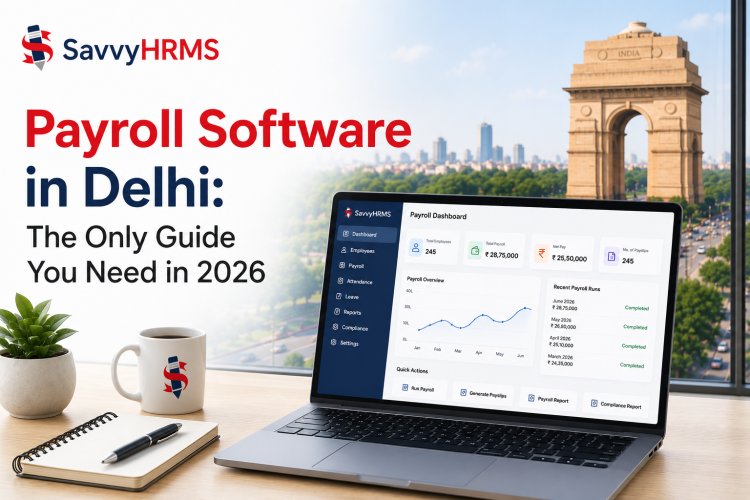
Payroll Software in Delhi: The Only Guide You Need in 2026
Picture this. It is the 28th of the month. Your HR manager is sitting with four open Excel sheets, two WhatsApp chats about attendance disputes, and a sticky note that says "check PF deadline." Nobody has had lunch. The finance team is waiting. And somewhere in the building, an employee is already asking when their salary will hit.
This is payroll day for most Delhi businesses. And none of it has to be this hard.
Payroll software in Delhi has changed the way thousands of businesses handle their monthly salary cycle , turning a 4-day nightmare into a half-day job that practically runs itself. If your business is still doing payroll the old way, this guide is for you.
We will cover everything , what payroll software actually does, why Delhi businesses need it more than most, how to choose the right one, and what to expect when you finally make the switch.
What Is Payroll Software , and Why Does It Matter?
Payroll software is a digital system that automates everything involved in paying your employees every month.
Not just the salary calculation, everything. Attendance data, deductions, tax calculations, payslip creation, government filings, and bank transfer files. It is one connected system that handles the full cycle from start to finish.
Here is what makes it different from a spreadsheet:
A spreadsheet does what you tell it to do. It does not know that ESI deductions should stop when an employee's salary crosses ₹21,000. It does not know that Delhi revised its minimum wages last October. It does not remind you that the PF challan is due on the 15th. It does not catch the formula error you made at 11 PM on the last working day of the month.
Payroll software knows all of this - and it acts on it automatically.
That is the real difference. Not speed. Not convenience. It is the difference between a system that relies on your HR team being perfect every single month and one that does not.
Why Payroll Is More Complicated in Delhi Than You Think
If you have ever wondered why payroll feels so heavy every month , it is because it genuinely is. Delhi businesses are dealing with one of the most layered payroll environments in India.
Four Statutory Deductions Every Month
Every employee's salary involves at least four government-mandated deductions , each with its own rules, rates, and deadlines.
Provident Fund (PF) : 12% of basic salary from the employee. Another 12% contributed by the employer. Both must be deposited with the EPFO by the 15th of every month. The ECR file must be in a specific format. Late deposits attract penalty interest.
Employee State Insurance (ESI) : 0.75% from employees and 3.25% from employers , but only for employees earning ₹21,000 per month or less. The moment an employee's salary crosses this limit, ESI stops. When it is done manually, this change is often missed for months.
Tax Deducted at Source (TDS) : TDS is not a fixed amount. It changes based on each employee's gross income, tax regime choice (old or new), investment declarations, HRA exemptions, and where they stand in the financial year. For a company with 50 employees, doing this correctly every month , and adjusting it as the year progresses , is genuinely complex.
Professional Tax (PT) : Delhi has its own specific PT slabs. Many companies apply the wrong rates, miss updates, or forget PT entirely. It is a small deduction per employee but non-compliance adds up quickly.
Delhi's Minimum Wages Change Twice Every Year
The Delhi government revises minimum wage rates every April and October. If your payroll system does not update automatically, you may be underpaying workers without knowing it , which is a legal violation, regardless of intent.
Multi-Location Teams Are the Norm, Not the Exception
Most Delhi businesses are not just in Delhi. Their workforce spreads across Noida, Gurugram, Faridabad, Ghaziabad, and sometimes beyond. Each location may have different shift timings, pay structures, leave policies, and overtime rules. Managing all of this across separate Excel files , and reconciling them every month , is where most payroll errors are born.
Every Team Has Its Own Pay Structure
Field staff earn travel allowances. Sales teams have monthly incentives. Factory workers in Okhla or Narela may be on daily wages. Contract staff have different deduction rules. Senior management gets reimbursements. New joiners need prorated calculations. Exiting employees need full and final settlement.
No spreadsheet handles all of this gracefully. Good payroll software handles all of it by default.
How Payroll Software Works : From Attendance to Bank Transfer
Here is exactly what happens when you run payroll through a modern payroll management system , step by step - in plain language.
Step 1 : Attendance Is Pulled In Automatically
The software connects directly to your biometric machine, mobile attendance app, or manual entry system. It reads each employee's working days, paid leaves taken, unpaid absences, late arrivals, and overtime hours , with no manual copying required.
Step 2 : Gross Salary Is Calculated
Based on each employee's pay structure , basic, HRA, special allowance, performance bonus, and other components , the software calculates their gross salary for the month. New joiners get prorated calculations. Employees on long leave get adjusted accordingly.
Step 3 : All Deductions Are Applied Correctly
PF (on the correct salary head), ESI (checked against the ₹21,000 eligibility limit), TDS (based on each individual's annual income projection and declarations), Professional Tax (per Delhi slabs), and any other deductions like loan EMIs or advance repayments. All done simultaneously. All accurate.
Step 4 : Net Salary and Payslips Are Ready
The system calculates the net pay for every employee and generates a professional payslip that shows every earning and deduction clearly. No manual creation. No formatting. Payslips are delivered directly to employees through the self-service portal or email.
Step 5 : Government Filing Files Are Generated
The PF ECR file, ESI contribution report, and TDS challan are all created automatically , in the exact formats required for government portal uploads. Your team just logs in and submits.
Step 6 : Bank Transfer File Is Exported
A bank-ready file containing every employee's net salary and account details is generated in the format your bank accepts. No manual entries. No transfer errors. Upload it directly and salaries go out.
Step 7 : Reports Are Available Instantly
Salary register, department-wise payroll cost, CTC breakup, year-to-date summaries, and compliance reports , all ready with one click. Finance team, auditors, and leadership get exactly what they need without anyone compiling data manually.
The entire process , from opening the system to finishing payroll , typically takes a few hours for a company with 100 employees. Manually, the same process takes 8 to 12 working days.
The Real Numbers: What Manual Payroll Costs Your Business Every Month
Most business owners think about the cost of payroll software. Very few sit down and calculate the cost of not having it.
Here is what manual payroll actually costs a Delhi company with 75 employees every single month:
Eight to twelve working days. Every month. For as long as you keep doing payroll manually.
Now consider what your HR team could do with those 10 extra days. Better hiring. Lower attrition. Stronger onboarding. An employee experience that actually keeps people around.
That is not just a time saving. It is a business advantage.
6 Payroll Mistakes That Happen Every Month in Delhi , and How Software Stops Them
These are not rare edge cases. These are mistakes that happen in real Delhi companies every single month , usually without anyone realising until there is a problem.
Mistake 1: Calculating PF on Gross Salary Instead of Basic
PF should be calculated on basic salary , not gross salary. The distinction matters significantly when an employee's gross includes large allowances. Companies applying PF on gross are over-contributing without realising it, and their employees' payslips do not reflect the correct deductions.
How software fixes it: The system is configured to apply PF only on the correct salary components. It does not matter how complex the pay structure is , the calculation is always accurate.
Mistake 2: Missing ESI Eligibility Changes After Increments
When an employee gets a salary increment that takes their monthly pay above ₹21,000, their ESI deduction should stop from that month. In manual systems, this is often missed for three, four, sometimes six months , leading to incorrect deductions that then need to be refunded and corrected in compliance records.
How software fixes it: The system automatically checks every employee's ESI eligibility each month. The moment their salary crosses the threshold, ESI deductions stop , automatically, with no human intervention required.
Mistake 3: Static TDS That Does Not Adjust Through the Year
TDS should be calculated as a running total , looking at how much tax an employee owes for the full year and distributing the deduction across the remaining months. Many companies set a fixed TDS amount at the start of the year and never adjust it. By March, employees are either under-deducted (creating a large unexpected tax bill) or over-deducted (creating a refund claim).
How software fixes it: TDS is recalculated dynamically every month. As employees submit investment declarations, as their income changes, and as the financial year progresses, the system adjusts the monthly deduction so that the full year's tax works out correctly.
Mistake 4: Late PF Challan Submission
PF and ESI challans are both due by the 15th of every month. Delay triggers penalty interest at 12% per annum on the unpaid amount, plus possible damages. In a busy payroll month, this deadline is genuinely easy to miss when preparation is manual.
How software fixes it: Challans are generated automatically as part of the payroll run. The system sends deadline reminders so nothing falls through. Your compliance calendar manages itself.
Mistake 5: Incorrect Full and Final Settlement Calculations
When an employee exits , whether they resign, are terminated, or retire , their full and final settlement involves earned leave encashment, gratuity (for employees with 5+ years of service), notice period recovery or payout, and prorated salary. Getting any one of these wrong creates disputes, sometimes legal ones.
How software fixes it: The system calculates full and final settlement automatically based on the employee's tenure, leave balance, notice period status, and exit date. No manual working. No disputes over the figures.
Mistake 6: No Audit Trail When Disputes Arise
When an employee questions their salary or a government audit asks about a specific month's PF filing, manual systems often cannot produce a clear, reliable record. Recreating payroll history from old spreadsheets is painful and sometimes impossible.
How software fixes it: Every payroll run is recorded with a full audit trail , who approved it, when it was processed, what each figure was, and what was filed. Complete transparency. One click to retrieve any month's records.
How to Choose the Right Payroll Software for Your Delhi Business
The market has many options. Here is a practical checklist so you evaluate them on what actually matters:
1. Full Indian Statutory Compliance , Built In, Not Bolted On PF, ESI, TDS, Delhi Professional Tax, Gratuity, Labour Welfare Fund, and National Pension Scheme. All must be handled natively. Verify that the platform updates automatically when government rules change , not after you call support.
2. Attendance Integration That Matches Your Setup Your payroll software should connect with however you track attendance , biometric terminals, face recognition, mobile GPS for field staff, or manual entry for smaller teams. Payroll and attendance must flow together without any manual copying.
3. Handles Every Pay Structure You Use Fixed monthly salaries. Daily wages. Piece-rate pay. Variable incentives. Contract staff. Expat packages. Your software should handle all of these without needing special customisation requests every time something changes.
4. Employee Self-Service That Actually Gets Used If the portal is clunky, employees will not use it. Look for a clean, mobile-friendly self-service experience where employees can check payslips, download Form 16, view tax deductions, and apply for loans or advances , without a single email to HR.
5. Multi-Location Payroll in One Dashboard If you have operations in Delhi plus Noida, Gurugram, or Faridabad, all locations must be manageable from one platform , with location-specific rules, pay structures, and compliance applied automatically.
6. Form 16 Auto-Generation at Year-End Generating Form 16 for 50+ employees manually takes days. Your payroll software should produce Form 16 for every employee automatically at year-end, downloadable in one batch.
7. Transparent, Itemised Payslips Every payslip should clearly show all earnings, all deductions, statutory contributions, and the net pay , matching the exact bank transfer amount. No rounding. No ambiguity.
8. Strong Data Security Salary data is among the most sensitive data in any organisation. Insist on encrypted storage, role-based access controls so only authorised people can view salary information, and regular automated backups.
9. Fast Support That Knows Indian Payroll This one matters more than most people think. When you hit an issue during a payroll run, you need someone who knows what an ECR file is, what the ESI portal requires, and what Form 24Q looks like. International tools often cannot offer this.
Savvy HRMS , Payroll Software Built From the Ground Up for Delhi Businesses
When Delhi businesses compare payroll software options and rank them on compliance depth, ease of use, and genuine suitability for Indian teams , Savvy HRMS consistently comes out on top.
This is not a global HR platform that added India as an afterthought. Savvy HRMS was designed specifically for how Indian businesses operate , with Delhi's multi-location structure, complex statutory environment, and diverse workforce types at the core of every feature.
What Delhi businesses get with Savvy HRMS:
- Fully automated salary processing , zero manual calculation from start to finish
- Complete Indian compliance , PF, ESI, TDS, Delhi PT, Gratuity, LWF, and NPS
- Biometric terminals, mobile GPS, and face recognition attendance , all integrated
- Professional payslips generated and delivered in one click
- PF ECR file, ESI returns, and TDS challans ready for direct government submission
- Form 16 auto-generated for every employee at financial year-end
- Multi-branch payroll across all Delhi-NCR locations , one dashboard
- Employee self-service portal , payslips, tax documents, and leave on demand
- Bank transfer file export , upload directly for same-day salary disbursement
- Flexible pay structure support , fixed, variable, daily, contract, and incentive-based
- Complete audit trail , every payroll run recorded and retrievable
- Dedicated India support team with deep hands-on knowledge of Indian payroll
From a 15-person IT company in Nehru Place to a 700-employee logistics firm running teams across Delhi-NCR, Savvy HRMS payroll software is built to handle the complexity , so your HR team does not have to.
What Businesses Actually Experience After Making the Switch
Here is what typically happens in the first three months after a Delhi company switches to proper payroll software:
In the first month : payroll is processed in hours instead of days. The HR team is surprised by how much time they suddenly have. A few employees comment that their payslip looks more professional than before. The PF challan is submitted two days before the deadline without any panic.
By the second month : employees are using the self-service portal. Leave requests stop arriving by WhatsApp. The question "when will my payslip be ready?" disappears from the HR inbox. The team starts trusting the system.
By the third month : TDS calculations have been quietly running in the background all year. Nobody has had to manually recalculate anything. Attendance data flows cleanly into every payroll run. The finance team gets their cost reports without having to ask for them. Compliance is up to date with no last-minute scrambling.
This is not an ambitious scenario. This is what good payroll management software produces when implemented properly.
Frequently Asked Questions About Payroll Software in Delhi
Q: What is the best payroll software in Delhi for small businesses?
For small businesses in Delhi, the best payroll software combines affordability, easy setup, and full Indian compliance from the start , PF, ESI, TDS, and Professional Tax included. Savvy HRMS works well for teams of 10 to 10,000, with pricing that scales with your headcount rather than charging enterprise rates from day one.
Q: How does payroll software handle PF and ESI in India?
Good payroll software calculates PF at 12% of basic salary (both employee and employer contributions), checks every employee's ESI eligibility against the ₹21,000 limit each month, and generates the ECR file for PF and the ESI contribution report , both in the correct government formats, ready to submit without any manual preparation.
Q: Can payroll software in Delhi manage employees across multiple locations?
Yes. Cloud-based platforms like Savvy HRMS manage employees across Delhi, Noida, Gurugram, Faridabad, and other locations from a single dashboard. Location-specific pay structures, shift patterns, and compliance rules are all applied automatically to the right employees.
Q: Does payroll software automatically update when Delhi's minimum wages change?
The best payroll software for Delhi businesses includes automatic minimum wage updates. When Delhi revises its rates , every April and October , your payroll reflects the new figures from the correct effective date without any manual changes from your side.
Q: How long does it take to implement payroll software?
Most cloud-based payroll platforms are fully implemented and running within 1 to 2 weeks. With Savvy HRMS's dedicated onboarding support, your first payroll cycle on the new system is guided step by step , so even the transition month runs cleanly.
Q: Is employee salary data safe on cloud-based payroll software?
Yes, provided you choose a reputable platform. Look for end-to-end encryption, role-based access controls (so only authorised team members can view salary data), regular automated backups, and data storage within India. Always ask vendors these questions directly before committing.
Q: What happens to our payroll history when we switch to new software?
Good platforms support data migration from your previous system , whether that is an older HRMS or Excel sheets. Your historical payroll records, employee master data, and past payslips can be imported so there is no gap in your records.
Q: Can payroll software handle contract staff and daily wage workers?
Yes. A well-built payroll system supports multiple pay structures , monthly fixed salary, daily wages, piece-rate pay, contract terms, and variable incentive components , all running in parallel within the same payroll run. Each employee type gets the correct deductions and payslip format.
Stop Letting Payroll Eat Your Month
Every company has a payroll cycle. The question is whether your team controls it , or it controls them.
Manual payroll is not just slow. It creates compliance risk, salary errors, employee frustration, and an HR team that spends their most valuable hours on work that a well-built system can do in minutes.
The right payroll software in Delhi solves all of it. Salaries go out accurately and on time. PF and ESI are always filed correctly. TDS takes care of itself. Employees access everything they need without bothering HR. And your HR team focuses on the work that actually makes your company a better place to work.
That is not a luxury. For any Delhi business with more than 10 employees, it is simply the smarter way to operate.
The next step is easy.









![[Latest] Moisture Curing Adhesives Market to Cross $10.29 Billion in Total Revenue by 2030 | Riding on a Strong 7.5% CAGR](https://blog.rackons.in/uploads/images/202408/image_380x226_66c827f41f4b0.jpg)