MC4 Connectors Demystified: The Essential Guide to Safe and Efficient Solar PV Installations!
MC4 Connectors Demystified: The Essential Guide to Safe and Efficient Solar PV Installations!
 pvsolarprotection
Share this Post to earn Money ( Upto ₹100 per 1000 Views )

The global transition to renewable energy is accelerating at an unprecedented pace, and solar power is at the heart of this change. Whether you’re a professional installer, project manager, or solar enthusiast, you already know that the reliability, safety, and efficiency of your photovoltaic (PV) system depend on the quality of every component—down to the smallest connection. Among these components, one stands out as both indispensable and often misunderstood: the MC4 connector.
What Are MC4 Connectors?
To lay the groundwork, let's define what an MC4 connector is and why it has become the industry gold standard.
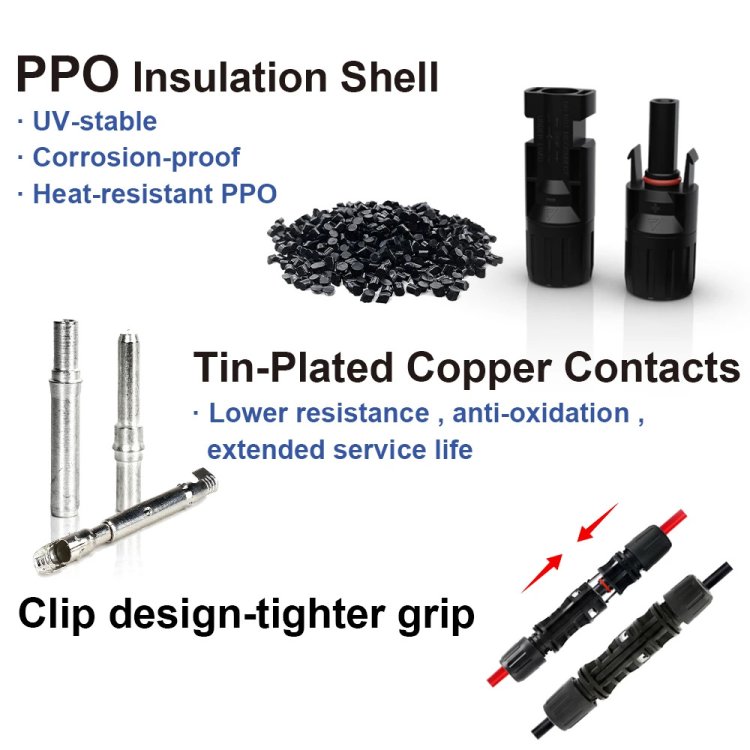
The MC4 (Multi-Contact 4mm) connector is a single-contact electrical connector widely used for connecting solar panels, combiner boxes, and inverters in a photovoltaic system. Developed by Multi-Contact (now Staubli Electrical Connectors) in the early 2000s, MC4 connectors are designed for longevity in harsh outdoor environments. They are distinguished by their:
- Locking mechanism: “Snap-in” secure connection that cannot be unplugged accidentally.
- Waterproofing: IP67 or IP68 ratings, ensuring resistance to dust, rain, and snow.
- Compatibility: Universal fit across most modern solar panels, making them plug-and-play for system expansion or maintenance.
- Current/Voltage Rating: Typically supporting up to 30A at 1000V or even 1500V DC in new models.
- Durability: UV-resistant, corrosion-resistant materials and weatherproof seals.
It’s no surprise that MC4 connectors are specified in almost every new solar PV installation worldwide, from residential rooftops to utility-scale solar farms.
Why Proper MC4 Connector Use is Crucial for Solar Projects
You might think of connectors as something small and simple. However, correct MC4 application can be the difference between a safe, efficient, and code-compliant array—or one plagued by hazards, power losses, or even fire risk.
The key reasons MC4 connectors matter:
- Electrical Safety
A poor connection can generate heat, leading to melted insulation, arcing, or even electrical fires. MC4 connectors offer secure, low-resistance mating—drastically reducing risk. - Weather Protection
Exposure to rain, dust, UV rays, and fluctuating temperatures can degrade cheap or improperly installed connectors. MC4s, with their gaskets and snap-fit design, maintain a reliable seal for decades. - System Efficiency
Every connector is a potential point of loss. With MC4 connectors' low contact resistance (< 0.5 mΩ when installed correctly), you’re less likely to experience unwanted voltage drops that decrease overall solar output. - Compliance and Warranty
Major inverter and panel manufacturers, as well as safety standards (like NEC, IEC), require MC4s for system certification. Using other connectors can void warranties or fail inspections. - Modularity and Maintenance
A significant advantage is modularity—MC4 connectors allow panels to be easily swapped, added, or serviced without special tools or complicated rewiring.
Anatomy of the MC4 Connector: Know Your Parts
For those new to MC4 connectors, let’s break down their main elements:
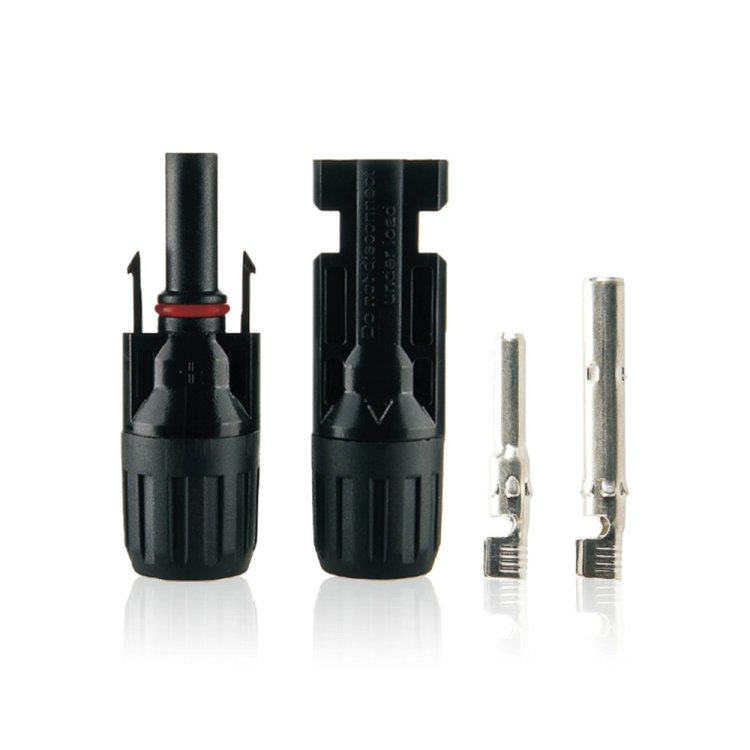
- Male and Female Housings: Ensure only the correct pairs can connect, adding a layer of safety and preventing accidental polarity reversal.
- Contact Pins: Precision-machined copper alloy, often tin-plated for corrosion protection, provides the electrical path.
- Insulation Gasket (Rubber Sealing): Ensures waterproofing at entry/exit points for the cable.
- Cable Gland and Nut: Clamps the cable securely and maintains the IP67/68 enclosure rating.
- Locking Tabs: Snap and lock with a distinct “click,” preventing accidental disconnection (requires MC4 tool for unlocking).
Step-by-Step: How to Install MC4 Connectors Safely
Even the best MC4 connector won’t perform if installed incorrectly. At Wenzhou Typle, we advocate adherence to these installation best practices:
- Strip the Cable: Use the specified size; most MC4s fit 2.5, 4, or 6 mm² (14, 12, or 10 AWG) PV wire. Expose just enough copper for the contact pin.
- Crimp the Contact Pin: Use only an MC4-certified crimping tool to avoid deformation. Hand-crimped or plier-squeezed pins may not make sufficient contact.
- Insert Pin into Housing: Push until you hear/feel the locking click.
- Thread Housing and Gland: Secure the cable gland tightly to maintain waterproofing.
- Connect Male to Female: Only connect MC4s of the same series/type—mixing brands can compromise sealing and electrical integrity.
Test: With a multimeter, check for continuity and correct polarity before live operation.
Pro tip: Never try to disconnect MC4s under load! Always turn off the corresponding array breaker or disconnect first.
Choosing the Right MC4 Connectors for Your System
There are many MC4-branded and MC4-compatible products on the market, but not all are equal. When selecting MC4 connectors for your solar project, consider:
1. Certification:
Ensure the connector carries genuine TÜV, UL, or IEC certification. Counterfeit or non-standard connectors can fail catastrophically.
2. Current and Voltage Rating:
Match your MC4 to the system’s maximum voltage (commonly 1000V or 1500V in large projects) and expected string current (up to 30A).
3. Cable Compatibility:
Double-check the compatible cable gauge and insulation diameter. A poor seal invites water ingress.
4. Material Quality:
UV and flame resistance are imperative for rooftop or exposed settings. Look for high-grade polycarbonate or PPO housings.
5. Brand Reputation:
Trusted brands or those supplied by established OEMs like Wenzhou Typle ensure not only product quality but consistent supply and after-sales support.
Common Mistakes to Avoid with MC4 Connectors
Even if you choose the best connector, errors in use can undo all safety benefits:
- Mixing Brands: While many connectors claim MC4 “compatibility,” sometimes tolerances differ, causing loose fits or failed waterproofing. Stick to the same brand across the array whenever possible.
- Improper Crimping: Using pliers or non-standard tools leads to poor current transfer and heat build-up.
- Under-Tightening or Over-Tightening Glands: Can break the seal or damage the housing.
- Not Using a Disconnect Tool: Forcibly pulling connectors apart without the correct MC4 tool can snap locking tabs or compromise the housing.
- Bypassing or Improper Polarity: Incorrect connections can lead to dangerous reverse voltage conditions.
- Advanced Topics: MC4 Branch Connectors, Inline Fuses, and More
MC4 connectors’ modularity supports advanced array configurations and protection devices:
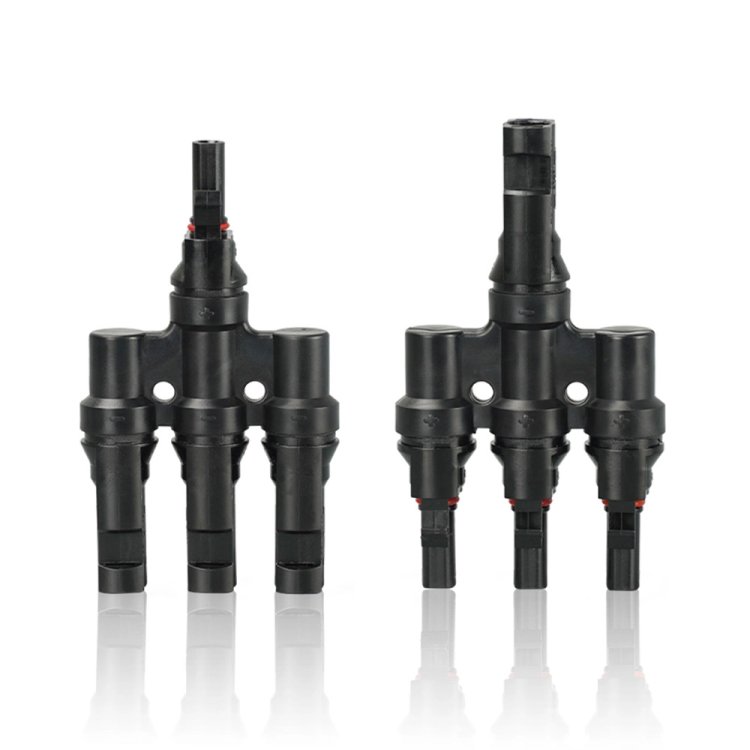
1. MC4 Branch Connectors (Y-Connectors):
Allow parallel wiring of PV strings or panels. Always ensure the combined current does not exceed connector ratings.
2. MC4 Inline Fuses:
Add string-level protection. Select fuses rated for expected current and ensure proper UV/weathering protection.
3. MC4 with Surge Protection:
Critical in lightning-prone areas—connectors with integrated surge arresters are now available.
4. MC4 Disconnection Under Load:
Some advanced connectors are rated for “hot disconnection,” but most standard MC4s require the circuit to be isolated before opening.
The Role of MC4 in Large-Scale Solar Projects
In utility-scale PV plants, the scale and complexity multiply. Here, MC4 connectors offer:
- Rapid String Commissioning: Pre-crimped, field-marked connectors enable plug-and-play wiring across acres.
- O&M Efficiency: Fault finding is faster with modular connectors; swapping a defective string is a matter of minutes.
- Long-Term Reliability: The right MC4 solutions can last beyond the typical 25-year module warranty.
At Wenzhou Typle New Energy Technology Co., Ltd., we collaborate with EPC firms and solar developers to provide mass-customized, pre-tested MC4 connectors and cables tailored to project layouts—helping you build solar installations quickly and safely.
Innovations and Future Trends in MC4 Technology
As PV systems and codes evolve, so do MC4 connectors:
- Higher Voltage and Current Models: To match the push toward 1500V arrays for lower BOS costs.
- Integrated Smart Functions: Embedded string monitoring chips for real-time performance data.
- Recycled Materials: Eco-friendly housing options for sustainable projects.
- Tool-Free Connectors: For rapid assembly/disassembly in field repairs, without compromising safety.
Leading-edge manufacturers like Wenzhou Typle continue to invest in next-generation MC4 solutions meeting tomorrow’s solar challenges.
Connecting Your Solar Future with Confidence
From small rooftops to sprawling solar farms, the humble MC4 connector is the backbone of safe, efficient, and long-lasting PV installations. Understanding the intricacies of MC4 selection, installation, and maintenance isn’t just good practice—it’s essential for system reliability, compliance, and investment protection.

MC4 Connector FAQ
Q1: Can I use any MC4 connector with any solar panel?
A: Most modern panels use MC4 connectors, but always check the manufacturer’s specifications for size, voltage, and certification. Also, try to use connectors from the same reputable brand or compatible MC4s validated by the OEM.
Q2: How do I ensure a waterproof MC4 connection?
A: Properly strip and crimp the wire, seat the contact fully, and tighten the cable gland to manufacturer-specified torque. Use MC4 connectors with certified IP67/68 ratings for outdoor use.
Q3: What happens if I mix MC4 connectors from different manufacturers?
A: Tolerances may differ, resulting in poor fits or improper sealing—this increases risk of water ingress and electrical failure. Stick to one brand where possible, or use only cross-tested connectors.
Q4: What is the lifespan of MC4 connectors?
A: High-quality connectors offer 25+ years of service life when properly installed, matching the warranty period of solar modules.
Q5: Do MC4 connectors affect system efficiency?
A: If installed correctly, MC4 connectors introduce negligible losses due to their low contact resistance. Poor crimping, loose connections, or corrosion will, however, increase resistive losses.
Q6: Can I install MC4 connectors myself?
A: Yes, but always use the proper tools and follow manufacturer’s instructions. For large projects or grid-tied systems, a certified electrician is strongly recommended.
Q7: Are MC4 connectors re-usable?
A: Technically, with the proper tool, connectors can sometimes be disassembled and reused, but industry best-practice is to use new connectors to ensure maximum safety and performance.
Q8: How do I disconnect MC4 connectors?
A: Always use an MC4 disconnect tool to avoid damage. Never disconnect under load—turn off or isolate the string first.
Q9: What cable types are compatible with MC4 connectors?
A: MC4s are designed for solar PV wire (double-insulated, UV-resistant), typically 2.5/4/6 mm² (14/12/10 AWG).
Q10: Why choose MC4 connectors supplied by Wenzhou Typle New Energy Technology Co., Ltd.?
A: Wenzhou Typle offers fully certified, high-durability MC4 connectors rigorously tested for safety, weatherproofing, and seamless compatibility, supported by technical guidance and fast delivery for projects worldwide.