Guide to Selecting CNC Machining Surface Finish Options for Engineers
Selecting the right surface finish is a critical engineering decision that directly affects performance, durability, and cost.
 hamcosportsinc
Share this Post to earn Money ( Upto ₹100 per 1000 Views )
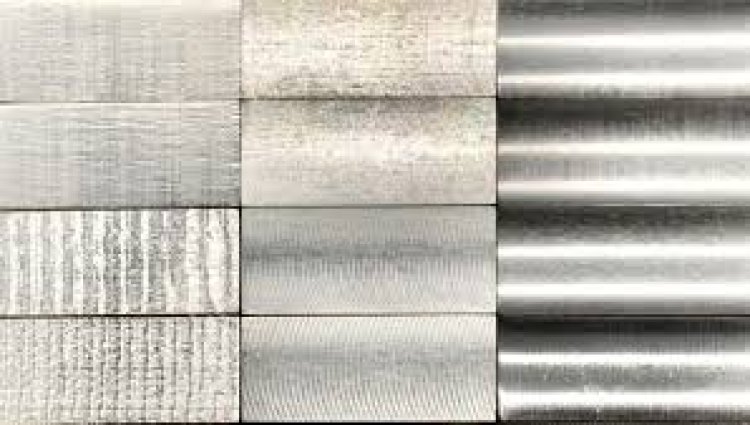
In modern manufacturing, surface finishing plays a critical role in determining the performance, appearance, and durability of machined components. Engineers must carefully evaluate cnc machining surface finish options to ensure parts meet functional and aesthetic requirements while staying within budget and production constraints.
This guide explains key surface finish types, selection factors, and real-world applications to help engineers make informed decisions when choosing the right finish for CNC-machined parts.
Understanding CNC Surface Finishes
Surface finish refers to the texture and quality of a machined part after it has been processed by a CNC machine. It is influenced by cutting tools, machining parameters, material type, and post-processing techniques. A well-chosen finish improves performance by reducing friction, enhancing corrosion resistance, and improving visual appeal.
Engineers often overlook surface finish early in the design stage, but it directly impacts part functionality and manufacturing cost. Selecting the right finish requires balancing precision, aesthetics, and durability based on application requirements.
Key points:
- Surface finish affects friction and wear resistance
- It influences fatigue strength and part lifespan
- Different materials respond differently to machining finishes
- Finish quality depends on toolpath strategy and feed rate
- Post-processing can significantly alter final surface properties
Common CNC Machining Surface Finish Options
There are several widely used cnc machining surface finish options, each serving different engineering and industrial needs. These finishes range from basic as-machined surfaces to advanced polished or coated treatments that enhance performance and appearance.
Choosing the correct finish depends on whether the priority is functionality, aesthetics, or cost-efficiency. For example, aerospace components may require smooth, high-tolerance finishes, while industrial brackets may only need a standard machined surface.
Common finish types include:
- As-machined finish (standard tool finish, visible tool marks)
- Bead blasting (uniform matte texture using abrasive media)
- Anodizing (protective oxide layer for aluminum parts)
- Powder coating (durable colored protective coating)
- Polishing (mirror-like surface for aesthetic or low-friction needs)
- Brushing (linear texture often used for decorative parts)
- Electroplating (metal coating for corrosion resistance and hardness enhancement)
Each option offers distinct benefits in terms of wear resistance, corrosion protection, and visual quality. Engineers must match these finishes with part requirements to avoid over-engineering or unnecessary costs.
Factors to Consider When Selecting Surface Finishes
Selecting the right CNC surface finish is not just a cosmetic decision; it involves engineering analysis of function, environment, and manufacturing limitations. The choice can significantly influence performance, especially in high-stress or precision applications.
When evaluating cnc machining surface finish options, engineers must consider operating conditions such as temperature, exposure to chemicals, and mechanical load. Material compatibility also plays a major role in determining which finish will adhere properly and last over time.
Key selection factors:
- Functional requirements (friction, wear, sealing surfaces)
- Environmental exposure (corrosion, humidity, chemicals)
- Material type (aluminum, steel, titanium, plastics)
- Tolerance and dimensional accuracy requirements
- Aesthetic expectations for consumer-facing products
- Cost constraints and production volume
- Lead time and post-processing availability
A balanced approach ensures that the selected finish does not compromise part performance or significantly increase production complexity. Engineers should always evaluate trade-offs between durability, appearance, and cost efficiency.
Surface Finish Choices for Prototype vs Production Parts
Surface finishing requirements vary significantly between prototype development and full-scale production. Prototypes often prioritize speed and functionality testing, while production parts demand consistency, durability, and long-term reliability.
In prototyping stages, simpler cnc machining surface finish options like as-machined or bead blasted finishes are commonly used. These allow engineers to quickly evaluate form, fit, and function without investing in expensive post-processing.
Prototype vs Production considerations:
- Prototypes:
- Faster turnaround time
- Lower cost finishes
- Minimal post-processing
- Focus on design validation
- Production parts:
- High consistency across batches
- Enhanced corrosion resistance
- Improved aesthetics for end users
- Strict quality control standards
As products move into mass production, finishes like anodizing, powder coating, or electroplating become more common due to their durability and repeatability. Engineers must plan surface finishing early to ensure scalability from prototype to production without redesign delays.
Cost, Performance, and Quality Tradeoffs
Every surface finish comes with trade-offs between cost, performance, and visual quality. Higher-end finishes generally improve durability and appearance but increase manufacturing time and expense. Engineers must carefully evaluate whether the added value justifies the additional cost.
Understanding cnc machining surface finish options helps in optimizing both performance and budget. In many cases, a simpler finish may perform adequately while reducing overall project costs.
Tradeoff considerations:
- High-performance finishes increase production cost
- Complex coatings may extend lead times
- Better finishes improve product lifespan and reliability
- Over-specifying finish can lead to unnecessary expenses
- Batch size influences cost per unit significantly
- Secondary finishing processes require additional quality checks
Engineers should collaborate with manufacturers early in the design process to identify the most cost-effective finishing strategy. This ensures the final product meets performance expectations without exceeding budget constraints.
Conclusion
Selecting the right surface finish is a critical engineering decision that directly affects performance, durability, and cost. With a wide range of cnc machining surface finish options available, engineers must carefully evaluate material properties, environmental conditions, and application requirements before making a choice.
By understanding common finishes, evaluating key selection factors, and balancing prototype versus production needs, engineers can optimize both functionality and efficiency. Ultimately, a well-planned surface finishing strategy ensures high-quality CNC-machined parts that perform reliably throughout their lifecycle.