
Comprehensive Guide to Dental Implant Kit Surgical Instruments
 GreyMed
Share this Post to earn Money ( Upto ₹100 per 1000 Views )
The field of dentistry has seen incredible advancements over the years, allowing professionals to perform procedures with more precision and efficiency than ever before. Among these advancements, dental implant surgery has become a vital solution for replacing missing teeth. Achieving successful dental implants requires not only skill but also the right tools. Dental implant kit surgical instruments play a crucial role in ensuring accuracy, safety, and efficacy in these procedures.
Understanding Dental Implant Kit Surgical Instruments
Dental implant kits are meticulously designed to support every stage of the implant process, from initial preparation to final placement. Each kit is a sophisticated compilation of instruments crafted for specific purposes, ensuring that dentists can operate with total control and precision. By using these kits, dental professionals can accommodate various patient needs, anatomical complexities, and clinical scenarios with ease.
These surgical instruments are made from high-quality materials such as medical-grade stainless steel, which offers durability, resistance to corrosion, and long-term performance. The design of each tool prioritises ergonomics and functionality while maintaining strict standards for hygiene and sterilisation.
Key Components of a Dental Implant Kit
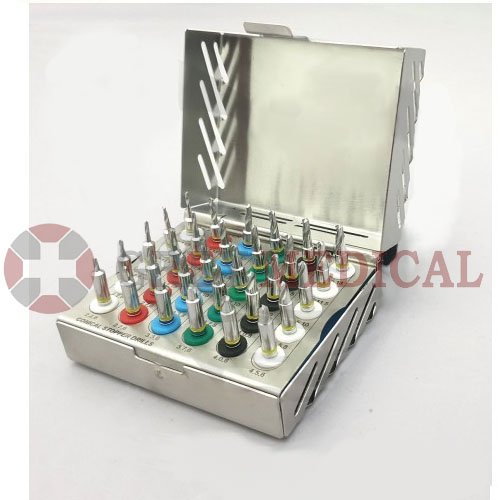
The instruments in a dental implant kit are essential for accurate and minimally invasive procedures. Typically, each kit includes drills, drivers, forceps, depth probes, and handpiece adapters. These tools serve distinct purposes and must work in harmony to ensure optimal outcomes.
The drills, for example, are organised in a range of diameters to create implant-specific sockets within the jawbone. Instruments such as depth probes and guides assist surgeons in maintaining proper alignment and insertion depth, which are vital for reducing patient discomfort and increasing the longevity of the implant. Handpiece adapters provide strong compatibility with surgical motors, allowing consistent torque and control.
The Role of Precision in Implant Surgery
The success of dental implants largely hinges on how effectively the instruments are used. Precision is critical at every stage, from creating the osteotomy in the jawbone to placing the abutment and implant crown. The tools in a dental implant kit assist practitioners in navigating complex anatomical structures such as nerves, sinuses, and bone ridges. By offering enhanced precision, these instruments reduce the risk of complications, improving healing times and patient satisfaction.
Additionally, modern dental implant kits often come with advanced features such as colour-coded instrument sets. This allows surgeons to quickly identify the required tools during surgery, streamlining the procedure without compromising accuracy. The result is a smoother clinical experience for both practitioner and patient.
Enhancing Patient Care with Surgical Kits
High-quality dental implant kits are a fundamental part of providing superior patient care. The tailored design of these instruments not only improves procedural outcomes but also minimises trauma to surrounding tissues. This is particularly important in ensuring patients experience less postoperative pain, faster recovery, and long-term success with their implants.
Dentists who are well-equipped with ergonomic and reliable surgical tools can also minimise chair time for their patients, which is often a significant factor in overall patient satisfaction. Advanced tools enable surgeons to focus entirely on delivering optimal results without interruptions caused by inadequate or incompatible instruments.
Why High-Quality Instruments Matter
The application of substandard instruments in implant surgery can lead to a range of complications, including poor fitting implants, jawbone damage, and even implant failure. Therefore, investing in high-quality surgical instruments is essential for dental professionals committed to excellence in their practice.
Today’s dental implant kits are often reviewed and approved by professional associations based on rigorous testing and adherence to industry standards. This ensures that the tools meet the specific needs of contemporary dental practices and can support consistent success in procedures.
The Future of Dental Implant Kits
Innovation in dental technology continues to push boundaries, and dental implant kits are no exception. From the introduction of 3D-printed surgical guides to improved biocompatible materials, these advancements promise to enhance the precision, efficiency, and safety of dental implant procedures.
Digital dentistry is also playing a growing role. Featuring guided implant systems and computer-aided design, modern kits are starting to integrate seamlessly with digital workflows. These innovations significantly reduce the margin for error while improving predictability and patient outcomes.
Final Thoughts
Dental implant kit surgical instruments are indispensable tools in modern dentistry, offering practitioners the precision and flexibility needed for successful implant procedures. High-quality kits not only improve the surgeon’s workflow but also enhance patient outcomes, providing a better quality of life for those receiving dental implants.
Investing in premium surgical instrument kits ensures a more efficient practice, reinforces patient trust, and sets the stage for consistent procedural success. For dental professionals aiming to excel in implantology, the right tools are not just an advantage—they are an absolute necessity.


















![Boost Surge X Reviews [Verified Users] - Tested by Users Safe, Effective?](https://blog.rackons.in/uploads/images/202605/image_380x226_69fc210feceb6.jpg)