
Building Strong Connections That Support Children at Home and in School
 yogipateltte
Share this Post to earn Money ( Upto ₹100 per 1000 Views )
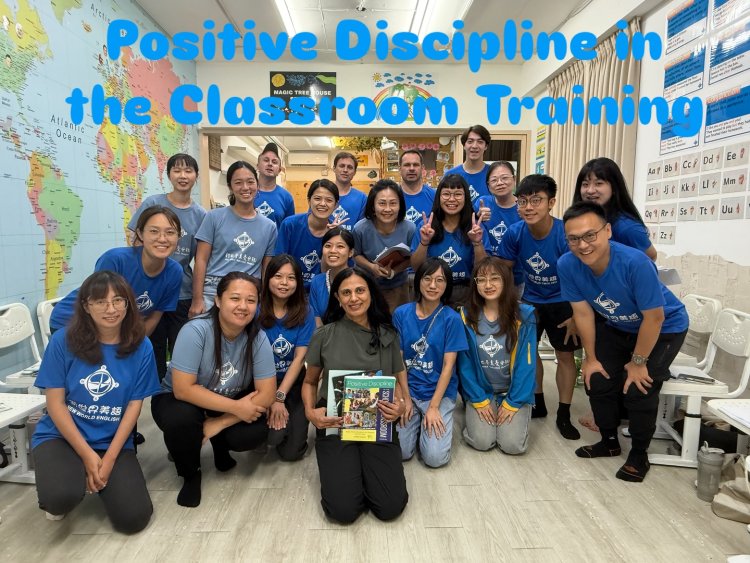
When a child walks into a classroom, they don’t leave their home life at the door. And when they return home in the afternoon, the challenges and successes of the school day follow them right back inside. This is why a healthy parent-teacher partnership in classroom management is more than a wonderful idea. It’s essential. When adults on both sides actually talk to each other, listen, and work as a team, children feel safer and more supported. Their behavior improves because the expectations around them feel steady and predictable.
Parents and teachers often want the same thing—kids who feel confident, cooperative, and capable. The problem is that communication can break down quickly if each side assumes the other is judging or blaming. A strong partnership isn’t built on perfection. It’s built on honest conversations, shared goals, and a willingness to understand each other’s perspectives.
Why Parent–Teacher Partnership Matters
Children thrive when the adults guiding them are consistent and reliable. If a teacher is setting boundaries with kindness, but the child goes home to a different kind of system, the child ends up confused. The same is true in reverse. When parents put effort into respectful communication and emotional awareness, but school feels rigid or unpredictable, it becomes difficult for the child to stay regulated.
A parent-teacher partnership in classroom management helps both sides understand what the child is experiencing. Teachers can explain what’s happening during the school day—what triggers a child, what calms them, and what motivates them. Parents can share what works at home, what routines help, and what challenges are showing up in daily life. This type of honest exchange reduces guesswork and builds a clearer, more stable path for the child.
Teachers often report that when communication with families improves, behavior problems decrease because the child feels understood from all sides. Parents also feel less alone when they realize the teacher isn’t judging them but working with them.
The Role of Parent Coaching
A big part of strengthening this partnership comes from parent coaching for respectful communication. Most parents desire to have quieter and more understanding communications with their kids; however, they might feel exhausted or even doubt their approach in such difficult times. Respectful communication doesn’t allow children to do anything they wish. Mainly, it is about the parents going through the whole process slowly and emotionally, and teaching instead of reacting with annoying frustration.
Parent coaching helps caregivers learn to:
1. Listen without rushing to correct or criticize.
Sometimes children just need to feel heard before they can calm down or change direction.
2. Set limits in a calm, steady tone.
Respectful doesn’t mean permissive. Boundaries still matter, but they’re delivered with warmth.
3. Replace yelling with guidance.
A child learns more from a calm explanation and a clear next step than from being startled into silence.
4. Use problem-solving instead of punishment.
When parents ask, “What happened?” and “How can we solve this together?” Kids learn responsibility.
5. Repair after mistakes.
Apologizing and reconnecting teach kids that relationships are stronger than conflict.
The children receive a unified message when their parents apply these techniques at home, while teachers in school employ the same tools. Children become aware that communication can be both direct and polite. They discover that grown-ups can impose restrictions without causing embarrassment. And they recognize that errors are not disasters—they are chances to gain knowledge.
How It All Comes Together
A strong parent-teacher partnership and respectful parent communication create an environment where the child doesn’t have to choose between expectations. The child sees that the adults guiding them are aligned. Home and school feel connected instead of contradictory. With that foundation, behavior becomes easier to manage because the child feels regulated and secure.
Yogi Patel’s Influence
Yogi Patel and similar visionaries have substantially contributed to the understanding of this domain with their practical advice. Patel, for example, teaches parents and teachers how to communicate in a way that is clear and empathetic simultaneously. Her method goes through the process of making real connections and ruling out the use of scripts or quick-fix solutions. She helps the mature ones perceive the emotional needs hiding behind the behavior and teaches them how to lead children with patience and respect. Her method has transformed and healed the connections of numerous families and teachers—connections that are really supportive of children at their various stages of development.
















