
10 Signs You May Need Functional Rhinoplasty Instead of Cosmetic Rhinoplasty
In this guide, we’ll explain what functional rhinoplasty is, how it differs from cosmetic rhinoplasty, and the 10 common signs that indicate you may benefit from this procedure.
 RhinoplastyHyderabad
 Share this Post to earn Money ( Upto ₹100 per 1000 Views )
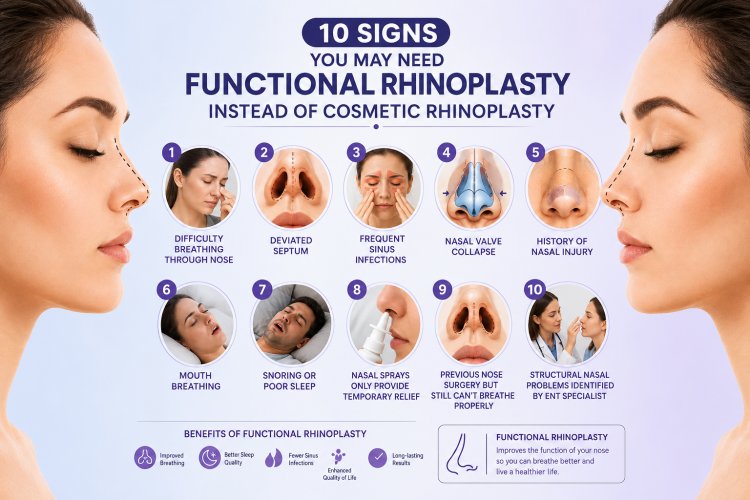
When most people hear the term rhinoplasty, they immediately think of changing the appearance of the nose. While cosmetic nose reshaping is popular, many patients actually require functional rhinoplasty to restore proper breathing and improve nasal function.
If you constantly struggle with nasal blockage, breathing difficulties, or recurring sinus problems, your nose may not just need a cosmetic improvement—it may require a medical solution.
In this guide, we’ll explain what functional rhinoplasty is, how it differs from cosmetic rhinoplasty, and the 10 common signs that indicate you may benefit from this procedure.
What Is Functional Rhinoplasty?
Functional rhinoplasty is a surgical procedure performed to improve the structure and function of the nose, allowing better airflow and easier breathing.
Unlike cosmetic rhinoplasty, which focuses on changing the external appearance of the nose, functional rhinoplasty corrects internal structural abnormalities that interfere with normal nasal breathing.
Common conditions treated include:
Deviated nasal septum
Nasal valve collapse
Enlarged turbinates
Congenital nasal deformities
Nasal trauma
Breathing difficulties after previous nose surgery
The goal is to restore proper nasal function while preserving or, when appropriate, improving the appearance of the nose.
Functional Rhinoplasty vs Cosmetic Rhinoplasty
Functional Rhinoplasty Cosmetic Rhinoplasty
Improves breathing Improves appearance
Corrects structural problems Reshapes the nose
Often medically necessary Elective procedure
Enhances nasal airflow Focuses on aesthetics
May be covered by insurance in some cases Usually self-funded
Many patients undergo a combination of both procedures to improve breathing while also achieving a balanced facial appearance.
10 Signs You May Need Functional Rhinoplasty
1. You Have Difficulty Breathing Through Your Nose
The most common indication for functional rhinoplasty is persistent nasal obstruction.
You may notice:
Constant blocked nose
Difficulty breathing during exercise
Mouth breathing
Trouble sleeping
If medications fail to provide lasting relief, surgery may be recommended.
2. You Have a Deviated Septum
A deviated septum occurs when the thin wall separating the nostrils shifts to one side.
Symptoms include:
One-sided nasal blockage
Frequent nosebleeds
Difficulty breathing
Snoring
Recurrent sinus infections
Functional rhinoplasty can straighten the nasal framework while improving airflow.
3. You Experience Frequent Sinus Infections
Poor airflow can prevent proper sinus drainage.
Common symptoms include:
Facial pressure
Nasal congestion
Thick mucus
Headaches
Recurring infections
Correcting structural nasal issues may reduce the frequency of sinus problems.
4. Your Nose Collapses When You Breathe In
If your nostrils collapse inward during inhalation, you may have nasal valve collapse.
Signs include:
Difficulty inhaling
Whistling sound
Feeling like your nose closes during deep breaths
Improvement when pulling the cheek sideways
Functional rhinoplasty strengthens the nasal valves to improve breathing.
5. You Suffered a Nasal Injury
Sports injuries, falls, or accidents can damage the nasal bones and cartilage.
After trauma, you may experience:
Crooked nose
Persistent congestion
Difficulty breathing
Snoring
Facial discomfort
Surgery can restore both nasal function and alignment.
6. You Breathe Through Your Mouth Most of the Time
Chronic mouth breathing may indicate severe nasal obstruction.
It can lead to:
Dry mouth
Bad breath
Poor sleep quality
Sore throat
Increased risk of dental problems
Improving nasal airflow helps restore natural breathing patterns.
7. You Snore or Have Poor Sleep Due to Nasal Blockage
While snoring has many causes, nasal obstruction often contributes significantly.
Functional rhinoplasty may improve:
Snoring
Sleep quality
Nasal airflow
Nighttime breathing comfort
For some patients, it can also complement treatment for sleep-disordered breathing.
8. Nasal Sprays Only Provide Temporary Relief
Many people rely on decongestant sprays for blocked noses.
However, if symptoms return as soon as the medication wears off, the underlying issue may be structural rather than inflammatory.
In such cases, surgery offers a more permanent solution.
9. You've Had Previous Nose Surgery but Still Can't Breathe Properly
Some patients remain unhappy after rhinoplasty because breathing becomes worse instead of better.
Revision functional rhinoplasty can address:
Scar tissue
Structural weakness
Nasal valve collapse
Persistent obstruction
This procedure focuses on restoring normal function while improving nasal stability.
10. Your ENT Specialist Identifies Structural Nasal Problems
An experienced ENT specialist may diagnose conditions such as:
Deviated septum
Weak nasal cartilage
Internal nasal valve narrowing
External valve collapse
Congenital abnormalities
If these issues affect breathing, functional rhinoplasty may be the most effective treatment.
Who Is a Good Candidate for Functional Rhinoplasty?
You may be a suitable candidate if you:
Have chronic nasal obstruction
Struggle with breathing despite medications
Have suffered nasal trauma
Experience frequent sinus infections
Have nasal valve collapse
Have a deviated septum
Are generally healthy
Have realistic expectations
A detailed consultation and nasal examination help determine the best treatment plan.
How Is Functional Rhinoplasty Performed?
The procedure usually involves:
Comprehensive nasal evaluation
Administration of anesthesia
Correction of structural abnormalities
Repair or reinforcement of nasal cartilage
Straightening of the nasal septum if required
Improving nasal airflow
Closing the incisions carefully
Depending on the complexity, surgery typically takes 2–4 hours.
Recovery After Functional Rhinoplasty
Recovery varies from person to person, but most patients experience gradual improvement over several weeks.
Week 1
Mild swelling and bruising
Nasal splint may be removed
Breathing gradually improves
Weeks 2–4
Reduced swelling
Better airflow
Return to most daily activities
Months 3–12
Continued healing
Improved nasal function
Final surgical outcome becomes more apparent
Following your surgeon’s post-operative instructions is essential for optimal recovery.
Benefits of Functional Rhinoplasty
The benefits extend beyond easier breathing.
Patients often experience:
Improved nasal airflow
Better sleep quality
Reduced snoring
Fewer sinus infections
Enhanced exercise tolerance
Less dependence on nasal sprays
Improved quality of life
Long-lasting functional results
Can Functional Rhinoplasty Also Improve Appearance?
Yes. Many patients choose to combine functional and cosmetic rhinoplasty during the same procedure.
This approach allows the surgeon to:
Improve breathing
Correct structural abnormalities
Enhance nasal symmetry
Maintain facial balance
Achieve both medical and aesthetic goals
Conclusion
Living with chronic nasal obstruction can significantly affect your sleep, daily activities, and overall quality of life. If you experience persistent breathing problems, recurrent sinus infections, or nasal blockage that doesn’t improve with medication, functional rhinoplasty may provide lasting relief by correcting the underlying structural cause.
Consulting an experienced ENT specialist is the first step toward determining whether this procedure is right for you. A thorough evaluation can identify the exact source of your symptoms and help create a treatment plan tailored to your needs. Early diagnosis and appropriate treatment can lead to improved breathing, better sleep, and a healthier, more comfortable life.




















![TrimX Reviews – [OFFICIAL REPORT] Ingredients, Benefits & Results](https://blog.rackons.in/uploads/images/202512/image_380x226_694e21179b527.jpg)